This article contains paid links. As an Amazon Associate, I earn from qualifying purchases. Product selections are based on listing and customer-review research, not hands-on testing.
A student room has a lot to do: somewhere to sleep, somewhere to study, and somewhere to feel at home between everything else. The furniture may be plain and the floor space limited, but a few thoughtful details can make it feel much more like yours.
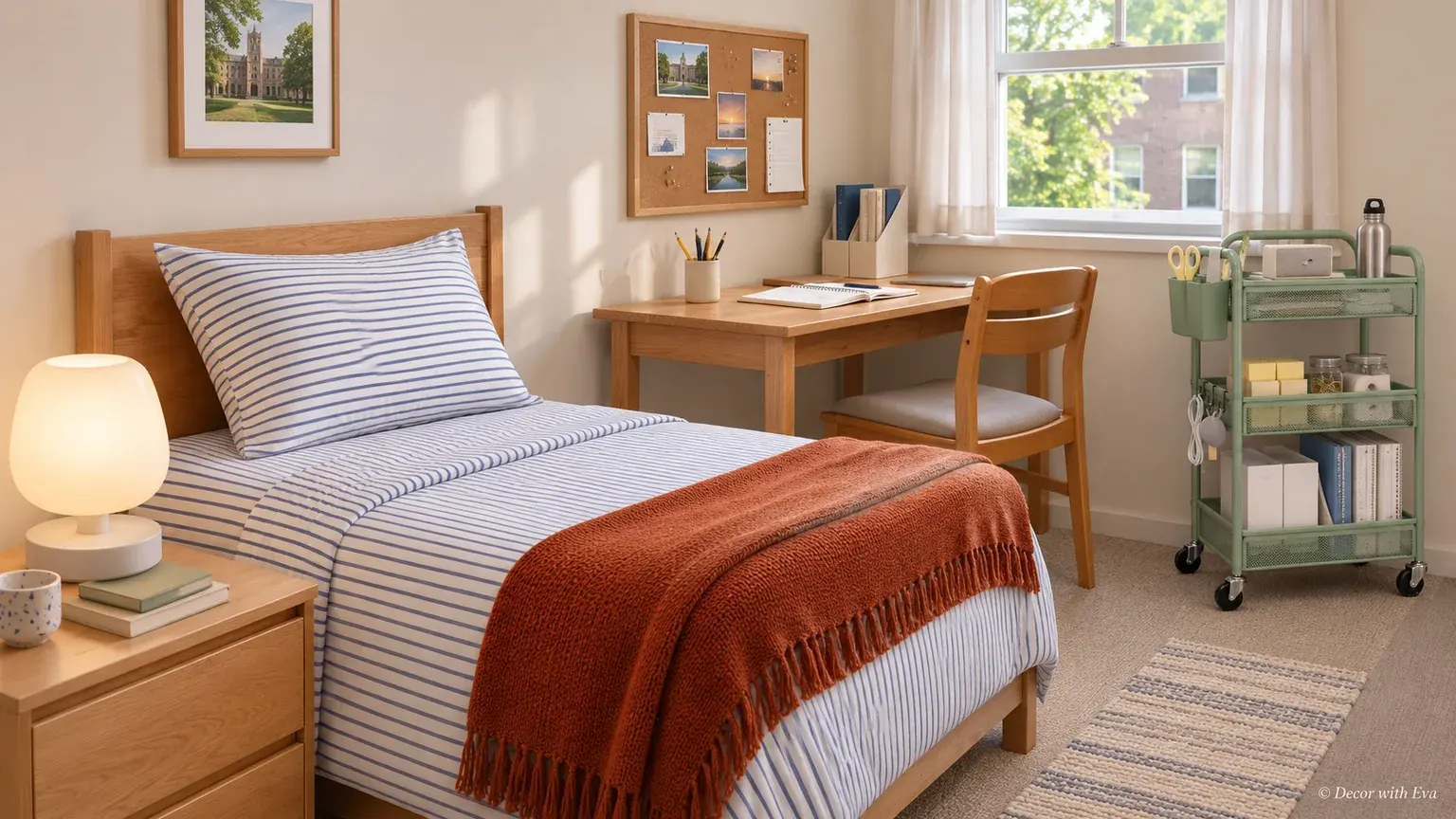
These student room decor ideas work across college dorms, shared rooms and small off-campus bedrooms. Start with one area you use every day, borrow what you can from home and leave yourself room to open a notebook. You do not need to recreate all twenty-one looks in one room.
Images are AI-created styling illustrations. Selected product photos informed the linked pieces; other furniture and accessories are separate styling props, not a complete set. The scenes show decorating possibilities rather than actual student rooms or tested installations.
Start with the Room You Have
Before shopping, measure the mattress, desk surface, storage gaps and door swings. Find out which furniture must stay and which mounting methods and electrical items your housing allows. Even products sold as removable can be restricted or mark a particular finish.
Your own housing handbook is the deciding source. For example, the University of Delaware’s community-living guide explains that official residence policies govern room use and directs students to housing staff for clarification. Check your campus guidance before changing the walls, bed setup or lighting.
For a manageable first pass, choose one bedding direction, one useful desk improvement and one personal display. Work with those for a week before filling the rest of the room.
1. Build the Room Around Blue-Striped Bedding
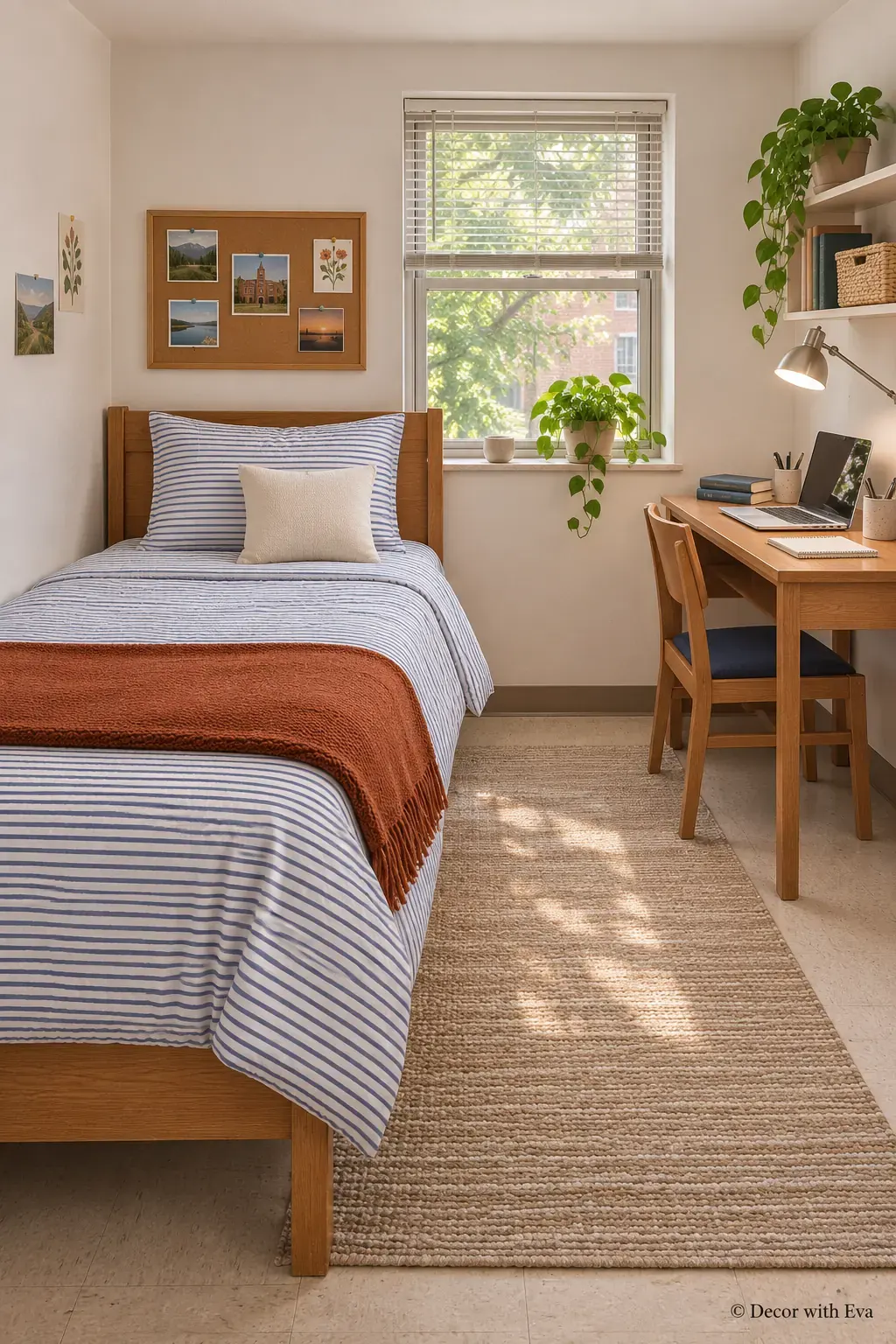
A narrow striped duvet gives a plain dorm bed a clear point of view without filling the walls. Blue and white feel crisp beside ordinary wood furniture, while a rust-colored throw keeps the combination from looking too nautical. Make the bed first, then decide whether the room needs anything else.
Keep the pillow arrangement modest: your sleeping pillow and one small cushion leave room to sit. Check the housing-provided mattress size before ordering sheets, and match the duvet cover to the insert as well. The linked set is a cover and pillow cover, not a complete bed-in-a-bag.
Make it your own: Reuse a throw in a contrasting color instead of buying a whole matching collection.
Selected Blue Stripes 2 cover measures 68 × 90 inches and comes with one 20 × 26-inch pillow cover. The duvet insert and sheets are not included. Compare both your mattress and insert measurements; Twin XL in a title does not make every bedding piece interchangeable.
2. Replace the Harsh Evening Glow with a Small Lamp
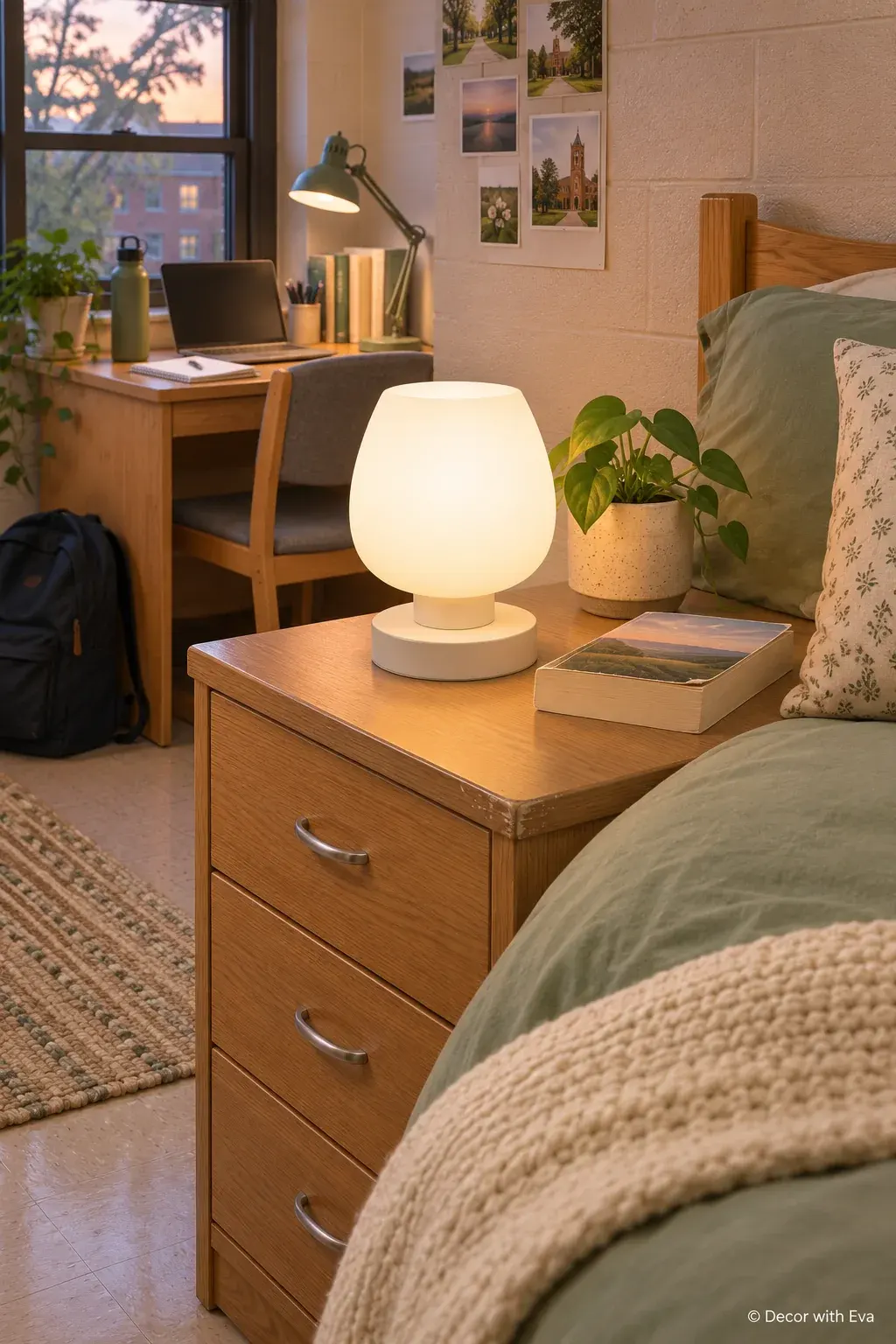
A little pool of warm light makes the room feel different after class. Put a compact shaded lamp on an existing bedside surface, with space to tap its base without knocking over a drink. Its rounded shape softens the straight lines of a standard-issue bed and dresser.
Use it for winding down, then keep a separate task light for reading or assignments. The small opal lamp pictured is an ambient accent; brightness preferences vary. Place it on a stable surface, keep fabric clear of the shade, and use electrical items that your residence permits.
Make it your own: Try moving a lamp from home before adding another light.
Selected white, one-pack, no-USB version is listed at 7.5 inches tall and 5.5 inches wide, with a metal base and a 2700K LED bulb. Treat it as a small ambient lamp rather than your only study light; a review specifically found it insufficient for reading.
3. Make a Photo Grid on an Existing Noticeboard
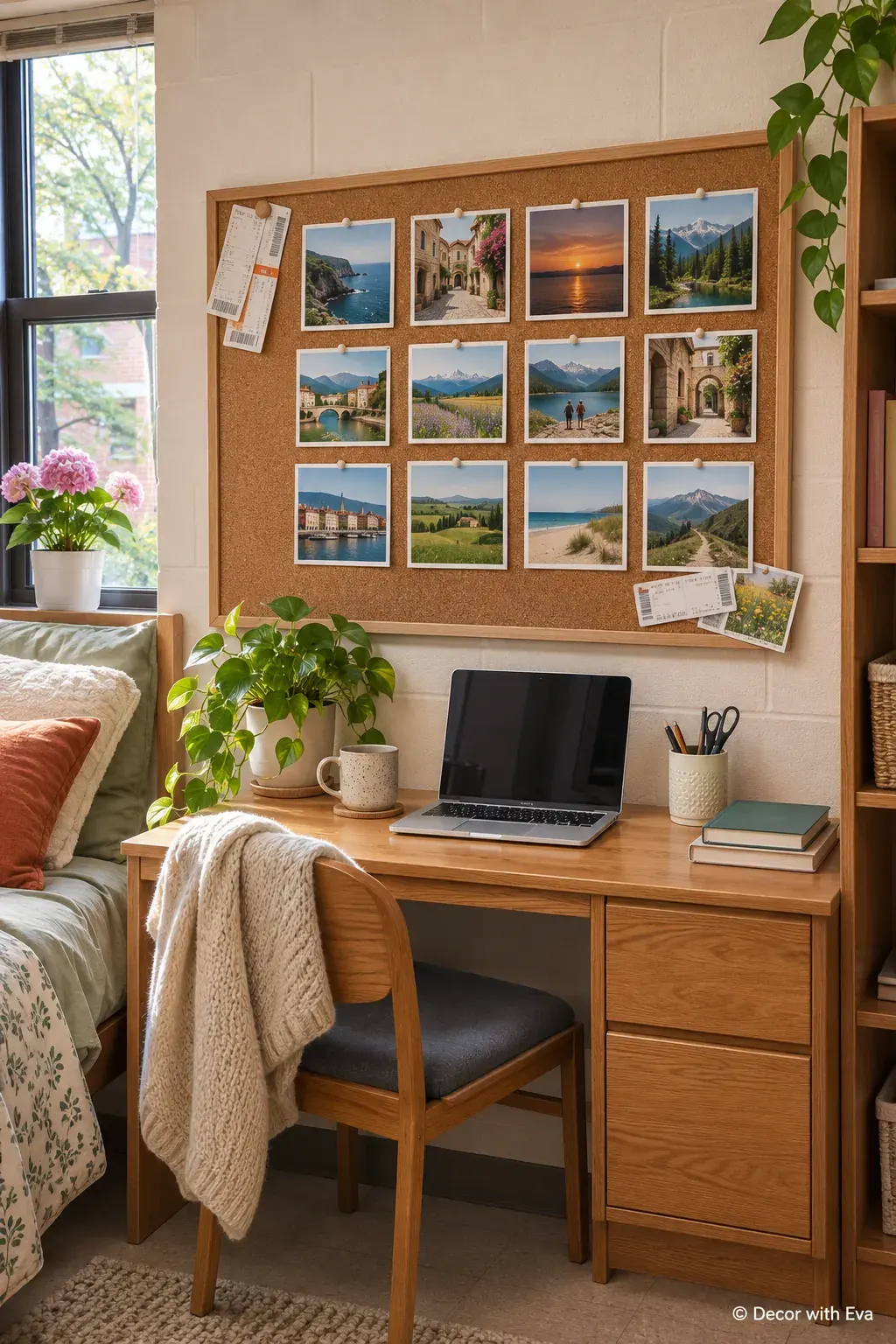
Personal photographs can do more for a student room than a cart full of decorations. Choose a small group that belongs together: friends, family, a favorite place and one ordinary moment you want to remember. A loose grid gives the memories a shape without making them feel like a formal gallery.
Use the room’s existing pinboard if there is one. Lay out the prints on the desk first, then leave a little breathing room around each image. A strip of plain paper behind mismatched prints can pull them together. For wall displays, check the allowed mounting method rather than assuming removable tape is permitted.
Make it your own: Print fewer favorites and rotate them during the semester.
4. Give Stationery a Quiet, Coordinated Home
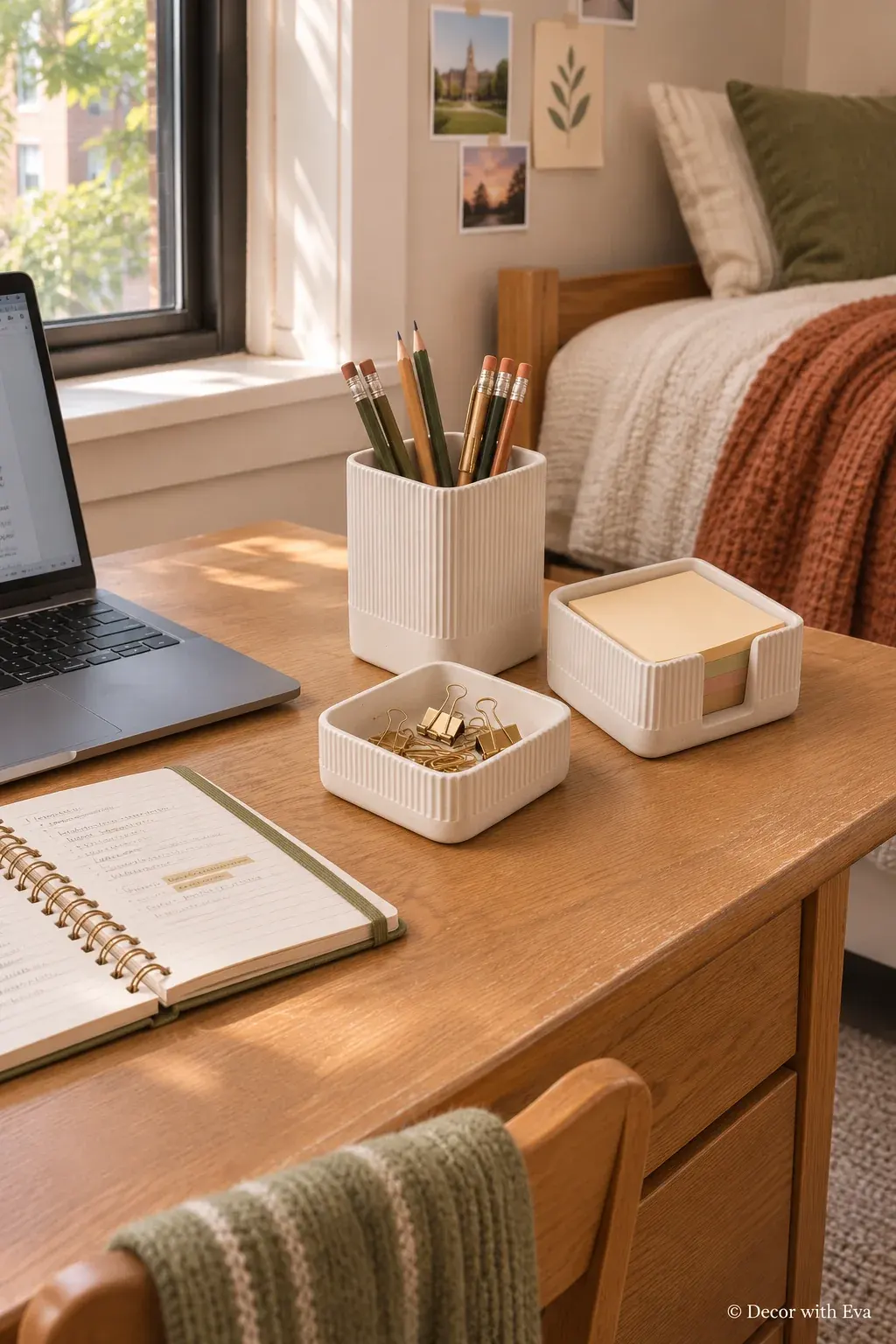
Pens, sticky notes and clips already live on a student desk. Grouping them in a few matching holders makes them look intentional and keeps them within reach. A fluted stone-like finish adds texture without competing with a colorful notebook or computer screen.
Keep the group at one back corner and leave the middle of the desk for an open notebook. The selected concrete set contains three small holders, not the pens or accessories. Concrete is heavier than plastic, so this works on the desktop rather than on a loosely mounted shelf.
Make it your own: Paint or wrap a clean reused pencil pot and pair it with a small dish you already own.
Three separate fluted concrete pieces: a 2.75 × 2.75 × 3.75-inch pen cup, a 3.5 × 3.5 × 1.5-inch note holder and a 3 × 3 × 1.1-inch clip tray. Stationery is separate. The listed Gray color can read more like warm stone white.
5. Use One Bold Art Print as the Focal Point
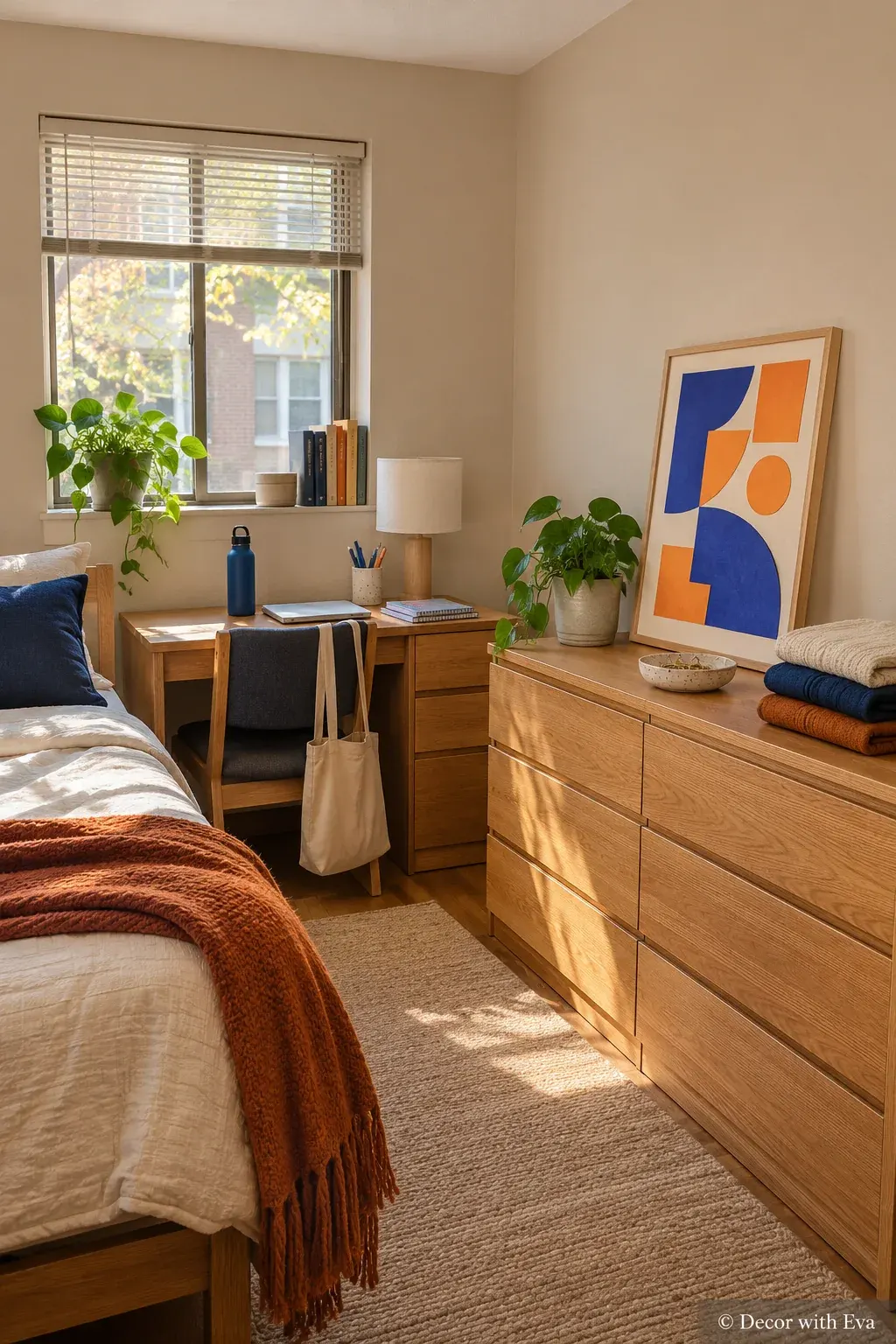
One larger piece of art can look calmer than dozens of tiny decorations. Choose something with a personal connection: a city you love, your own abstract painting, or a print from a local artist. A strong cobalt, orange or pink shape gives an otherwise plain room a confident center.
Check where the print can go before choosing the size. A lightweight frame on a stable dresser, backed securely against the wall, avoids a new row of holes. Do not balance glass frames above your pillow. If wall mounting is allowed, follow the approved system and its weight limit.
Make it your own: Make an abstract paper collage and frame it in a secondhand frame.
6. Park a Colorful Cart Beside the Desk
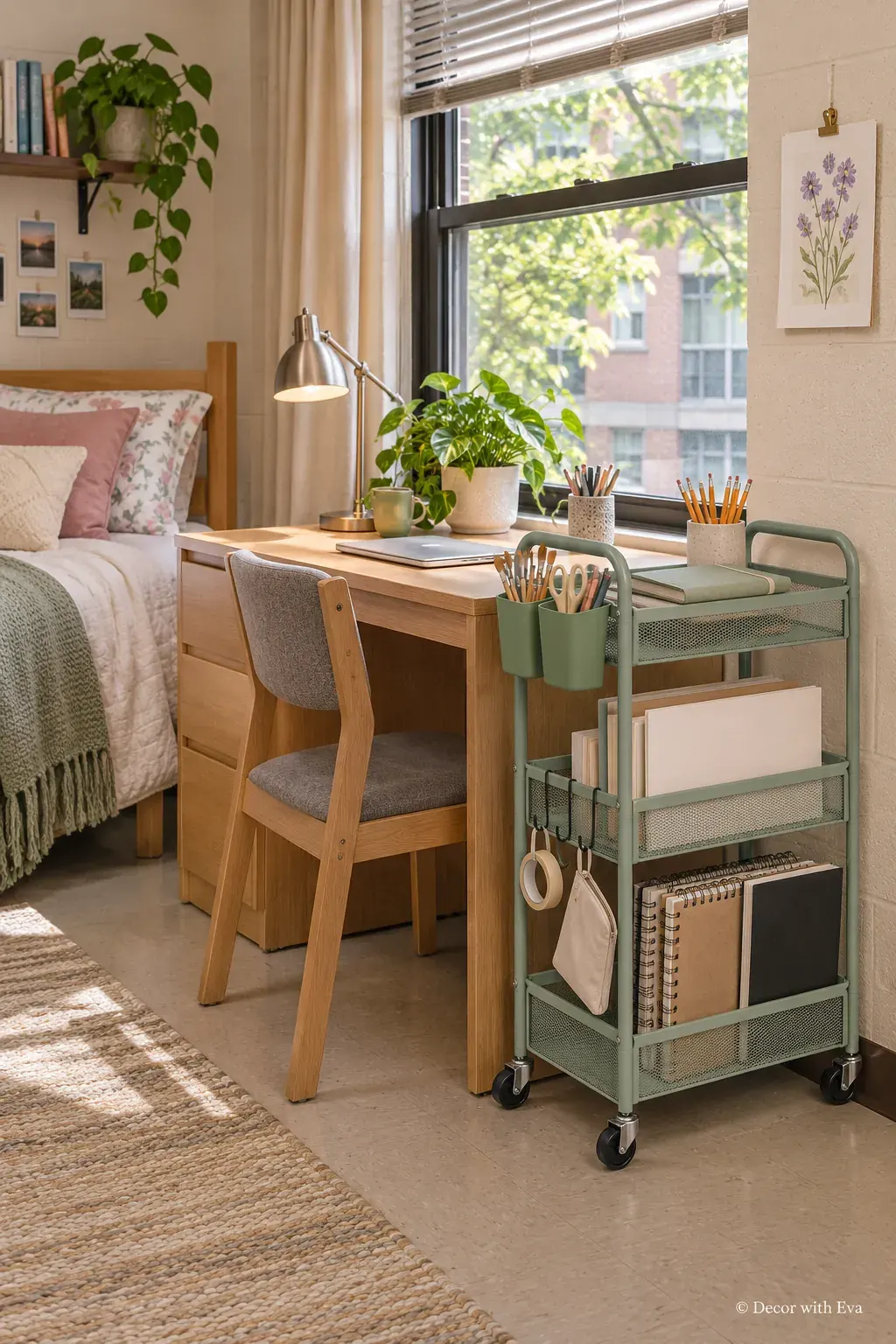
A slim cart can gather the things that make a desk feel crowded: extra notebooks, art supplies and the book you are reading for fun. Choose a color you enjoy seeing, then repeat it once in a notebook or a cushion. The storage becomes part of the palette.
Keep the heaviest items low and leave the top basket easy to reach. Measure the complete assembled cart, including hanging cups and handles, against the actual gap. It should not steal the chair’s pullout space or turn the route to the door into an obstacle course.
Make it your own: Rearrange an existing narrow shelf before buying a wheeled alternative.
Selected green metal-mesh cart includes two hanging cups and three hooks. The listing gives a roughly 15.35 × 11.45-inch footprint and approximately 30-inch height, with inconsistent height and weight entries. Confirm the assembled measurements, including handles and attachments, before fitting a tight gap.
7. Put a Small Textured Rug Where You Step Out of Bed
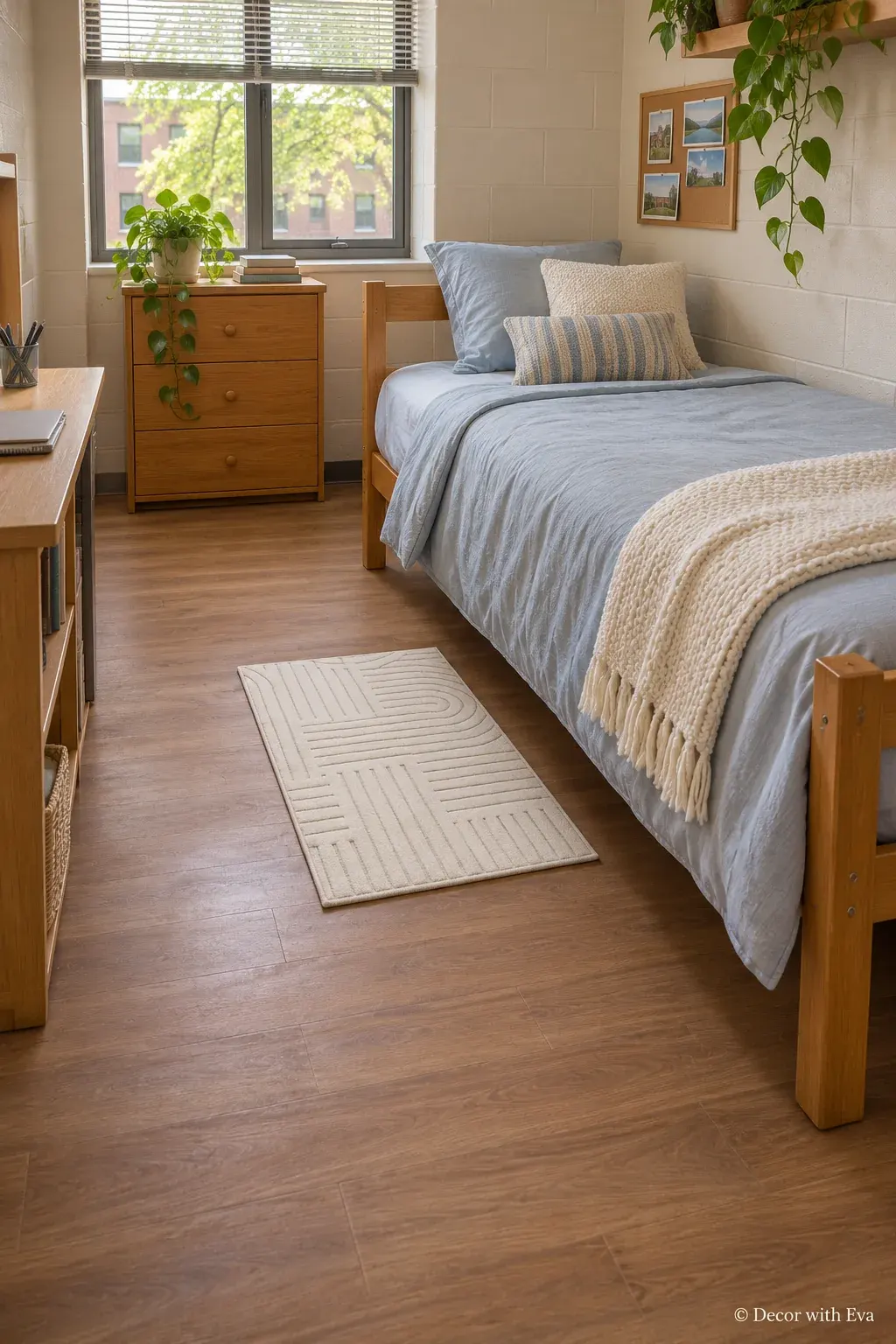
A bedside rug is a manageable way to soften a room with a hard floor. It only needs to cover the place where your feet land; it does not have to reach under every piece of furniture. A raised arch pattern adds interest in cream without introducing another loud color.
Tape out the two-by-three-foot footprint first and open any nearby door. Keep the rug outside the desk chair’s rolling path and let folded edges settle flat. Check the backing against your floor finish, and use a compatible pad only if needed and permitted.
Make it your own: Bring a small washable rug from home if it fits the available space.
Selected 2 × 3-foot rug has a raised arch pattern, a cotton/polyester blend and TPR-coated backing, with pile listed up to about 0.4 inch. Check backing compatibility and the current care label. Reviews across other sizes include creases and mixed grip feedback, so allow it to lie flat before use.
8. Choose a Task Lamp That Earns Its Desk Space
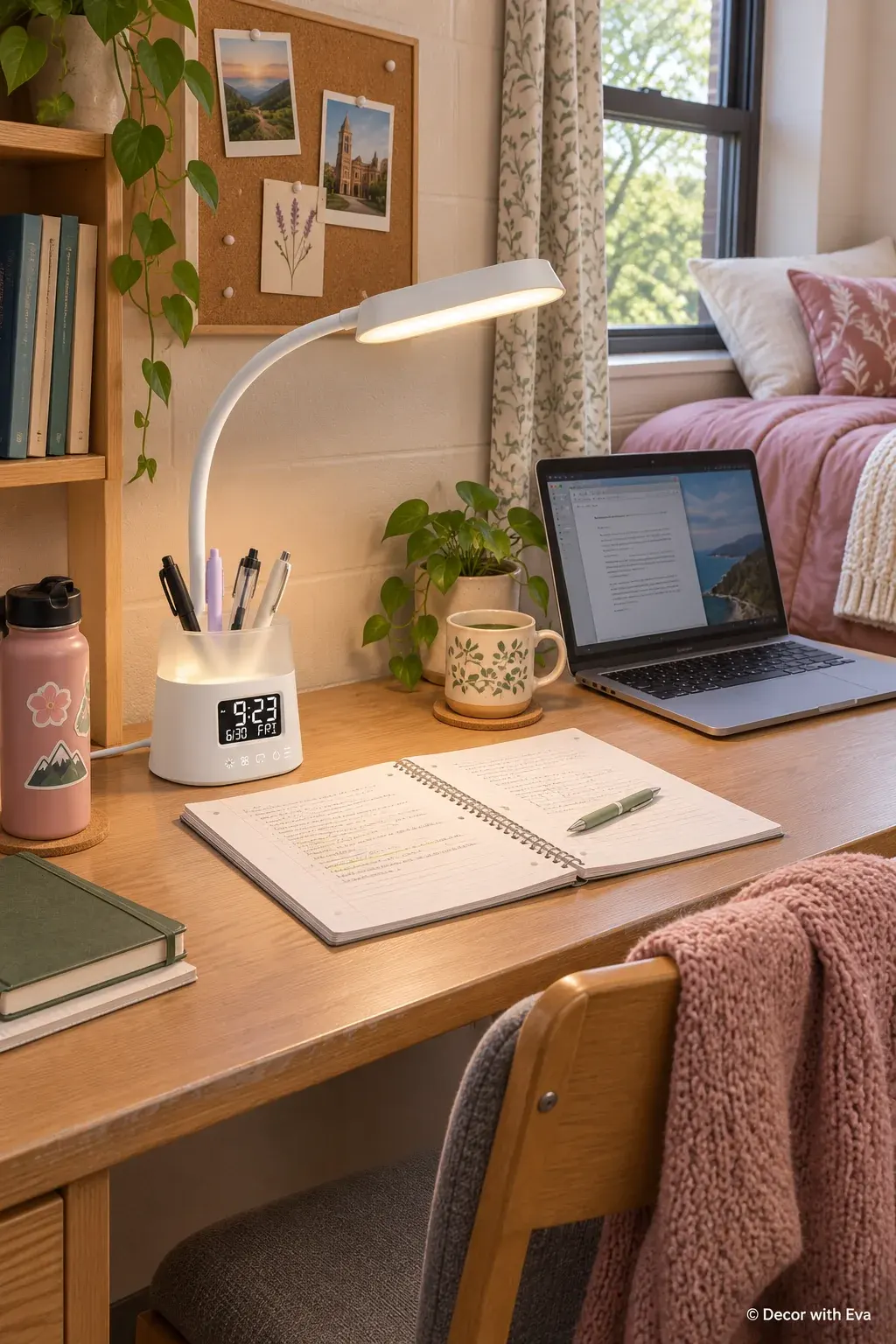
A desk light should leave room for the work underneath it. An adjustable neck lets you aim the light at the page, while a built-in pen cup can replace a separate holder. The white finish keeps the arrangement light beside a dark laptop and a stack of textbooks.
Set it to the side where your writing hand will cast less shadow, then test the angle while sitting normally. The clock and colored base are optional extras, not a substitute for checking how well the page is lit. Start with a neutral white or warm setting and learn the controls before move-in week gets busy.
Make it your own: Use a task lamp you already own and remove the extra pots crowding around its base.
Selected white LED lamp has a flexible neck, pen cup, clock display, dimming and color-temperature controls. Keep the lamp head aimed at the work surface and check the instructions for the clock and dimming controls; reviews show some users find these settings confusing.
9. Let a Bedside Pocket Take the Place of a Table
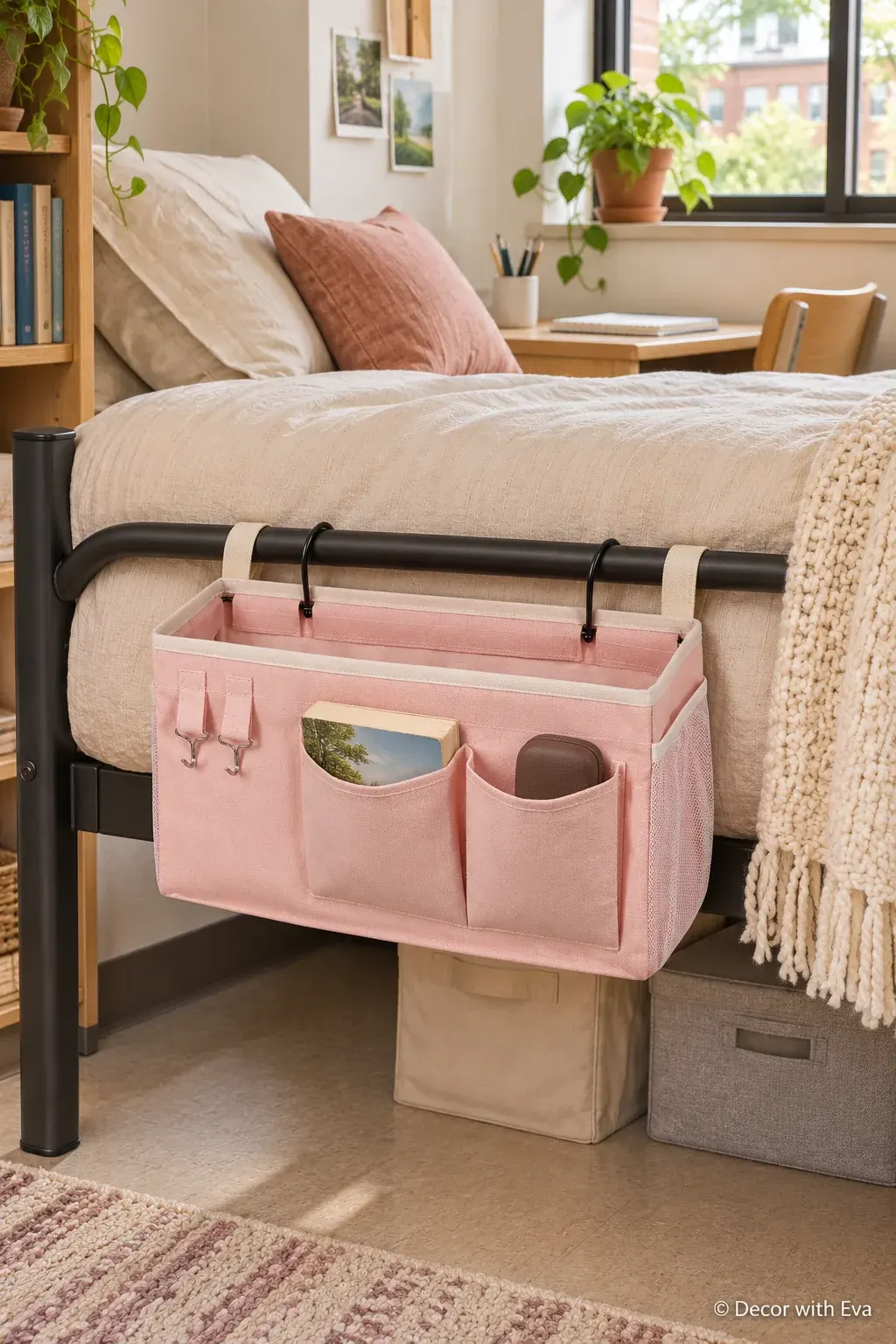
When there is no space for another piece of furniture, a soft bedside pocket can hold the essentials. A paperback, glasses case and small notebook are enough. A blush fabric version brings a little color to the side of an ordinary bed instead of leaving everything in a pile on the floor.
Check that the caddy’s hooks fit your specific rail; a canvas organizer designed for a narrow rail will not automatically work on a broad wooden frame. Keep it away from the ladder or access side of a raised bed. This is light storage, not a place to balance an open drink.
Make it your own: If your bed has no suitable rail, keep one small tray on the existing dresser instead.
Selected one-piece light-pink canvas-and-iron organizer measures about 14.57 × 4.72 × 7.87 inches. The listing specifies a supporting rail diameter below 1.97 inches. Check the rail shape and attachment instructions; it will not fit every dorm bed.
10. Create a Mini Getting-Ready Corner
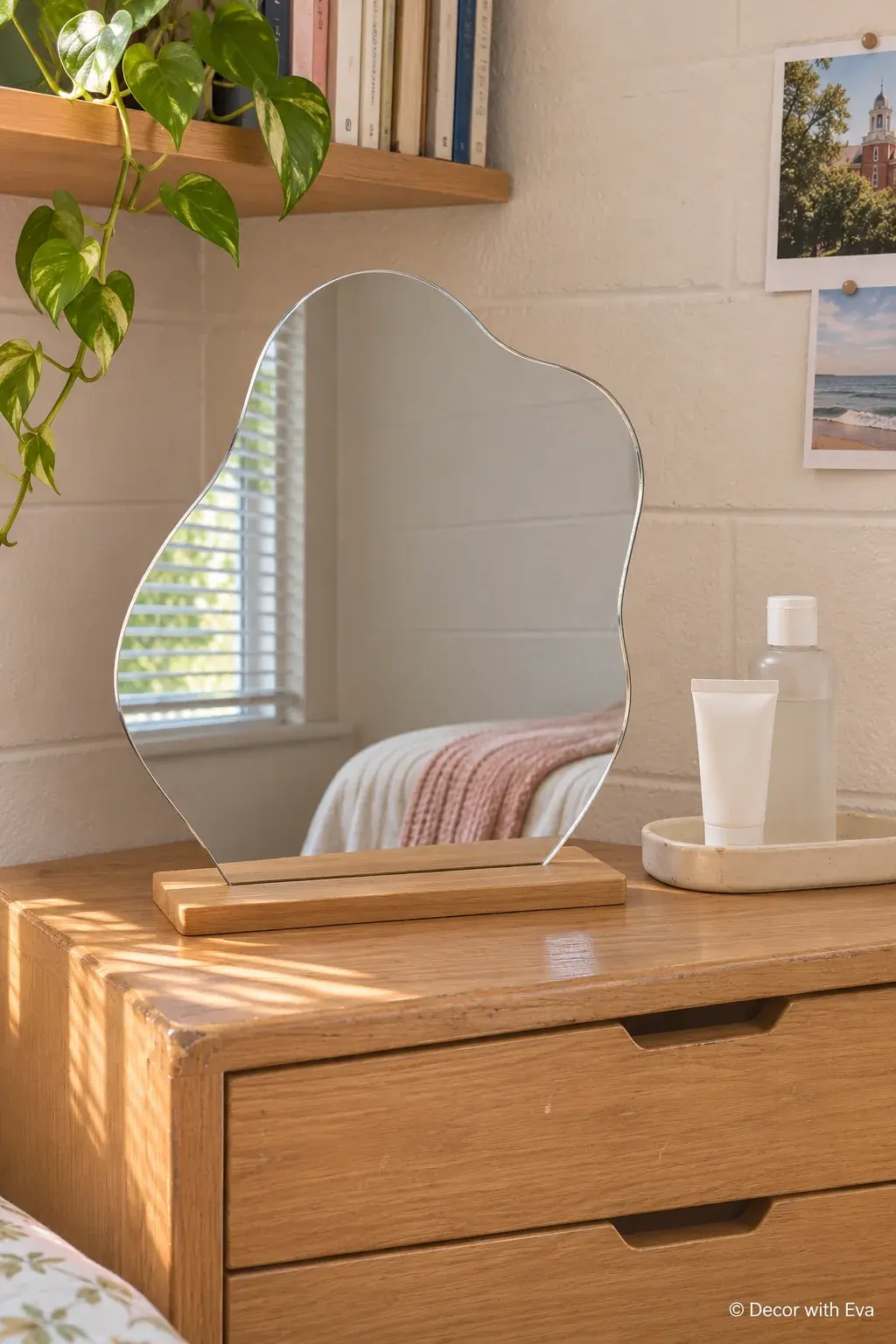
A small mirror gives the dresser a purpose beyond collecting miscellaneous stuff. Pair a softly irregular shape with one tray for daily essentials, then stop before the whole surface becomes a second bathroom cabinet. The reflected window light adds a pleasant detail even when the room is otherwise simple.
Use a stable spot away from the desk’s busiest elbow area. The linked cloud-shaped mirror is a lightweight reflective panel in a slot base rather than a tilting vanity mirror. Check the dimensions for your routine; a decorative accent mirror may not replace a larger mirror for every task.
Make it your own: Use your existing mirror and corral toiletries in a shallow box or saucer.
Selected asymmetrical reflective panel sits in a wooden slot base. Buyer reports describe a lightweight plastic mirror rather than conventional glass, and it stands upright rather than tilting. Remove the protective film as instructed and verify current dimensions and package contents before buying.
11. Repeat One Accent Color in Three Small Places
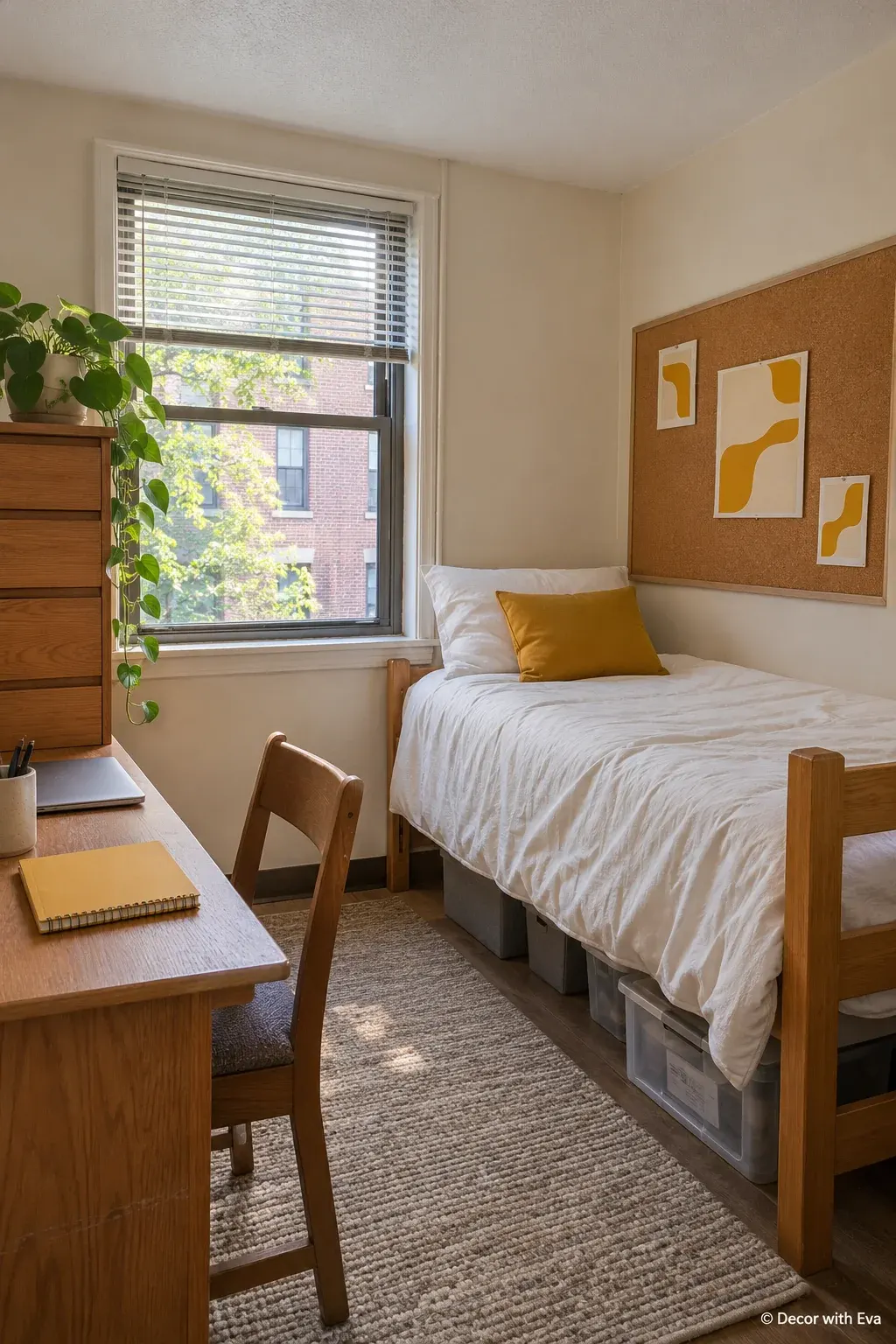
A room can feel coordinated without a matching furniture set. Pick a color from something you already love, then repeat it in three spots at different heights. A mustard cushion, a notebook and a small print can connect the bed, desk and wall while everything else stays ordinary.
Use the same general color family rather than chasing an exact match. Vary the materials so the room feels collected: cotton on the bed, paper on the wall and a glazed mug on the desk. Keep each item useful or meaningful; the color is a guide, not a reason to buy three extras.
Make it your own: Shop your bags, scarves, stationery and old prints for a color you already own.
12. Show Off Favorite Books on the Furniture You Have
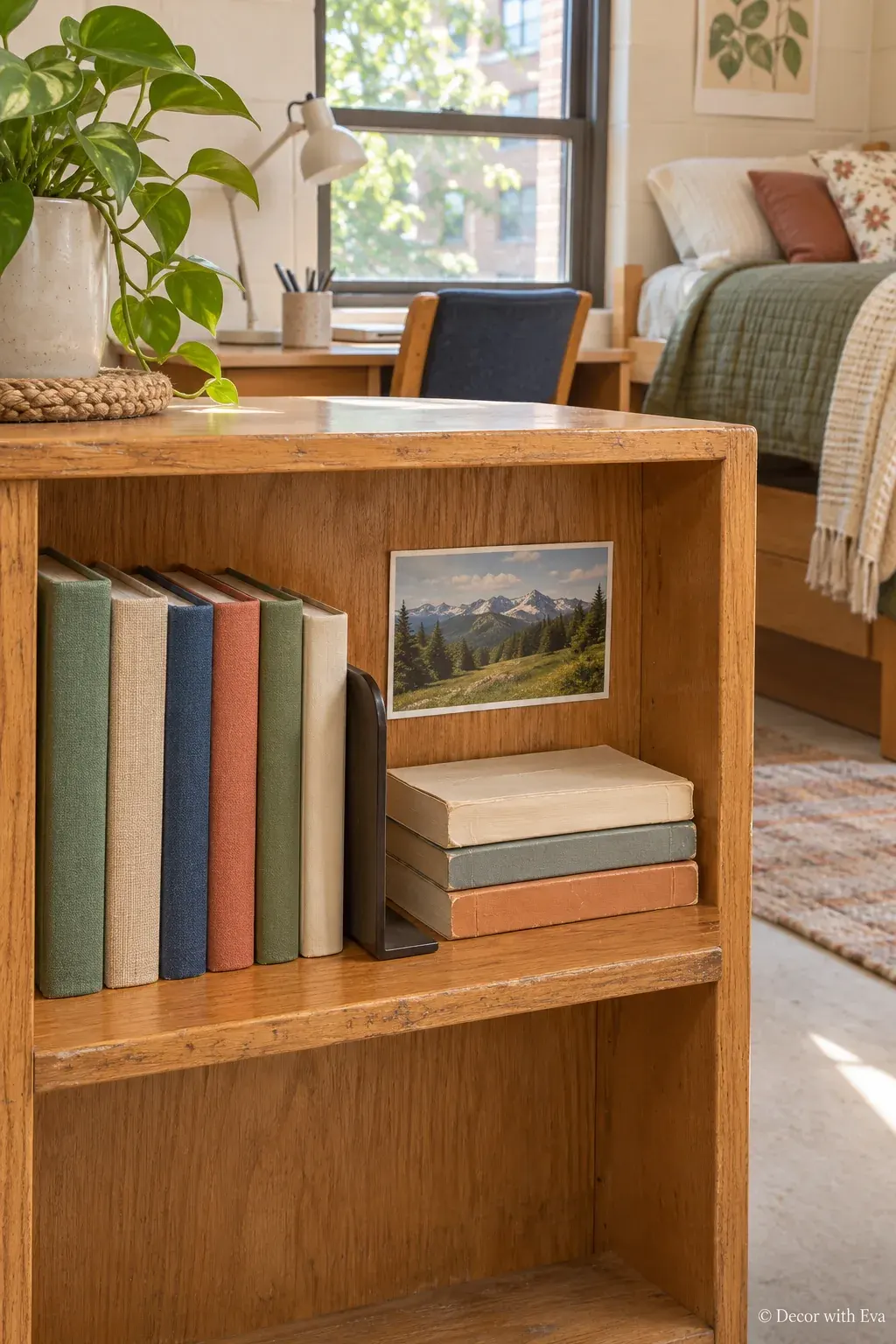
Books can be the most personal decoration in a student room. Give a few favorites a visible place on an existing shelf instead of hiding all the interesting spines among course binders. Mix one short horizontal stack with an upright row for a little variety.
Keep the shelf useful and easy to dust. Heavier volumes belong low, and a stable bookend should hold the row rather than a fragile ornament. A postcard leaning behind the books adds a layer without requiring more furniture or new wall fixings.
Make it your own: Rotate a few favorites from your main book stack each month.
13. Make Under-Bed Storage Look Like Part of the Room
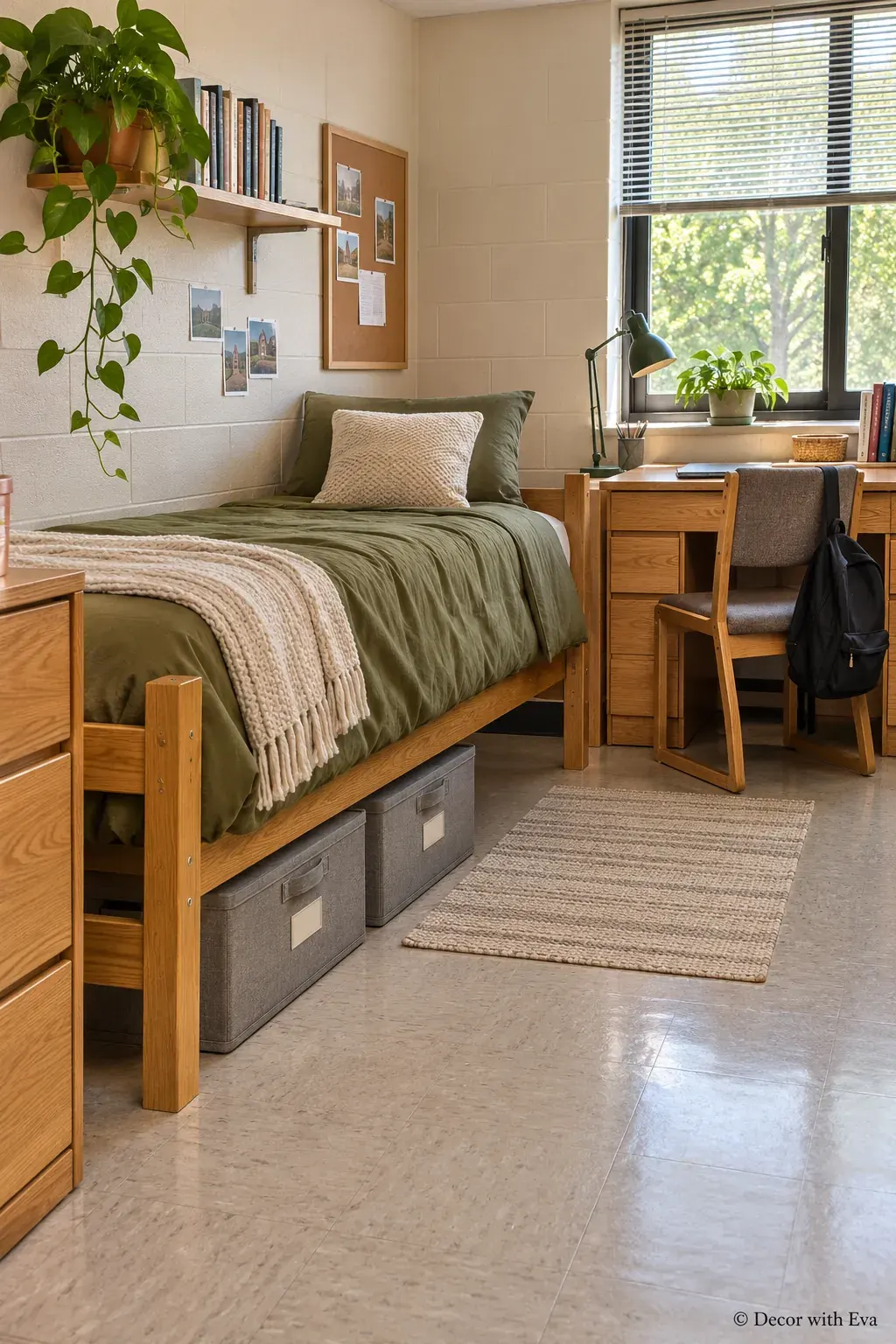
Visible storage is easier on the eye when it has a little consistency. Two low boxes in the same color can look calmer than a row of unrelated bags. Choose a soft neutral if you want them to recede, or repeat an accent color from the bedding.
Measure from the floor to the lowest obstruction under the bed, not just to the mattress. Check that the boxes can slide out without moving the bed or blocking a heater. Use matching paper labels to explain what is inside. There is no need to raise the bed just to recreate the picture.
Make it your own: Cover sturdy reused boxes with matching paper, or use existing suitcases if they fit.
14. Set Up a Small Plant Spot by the Window
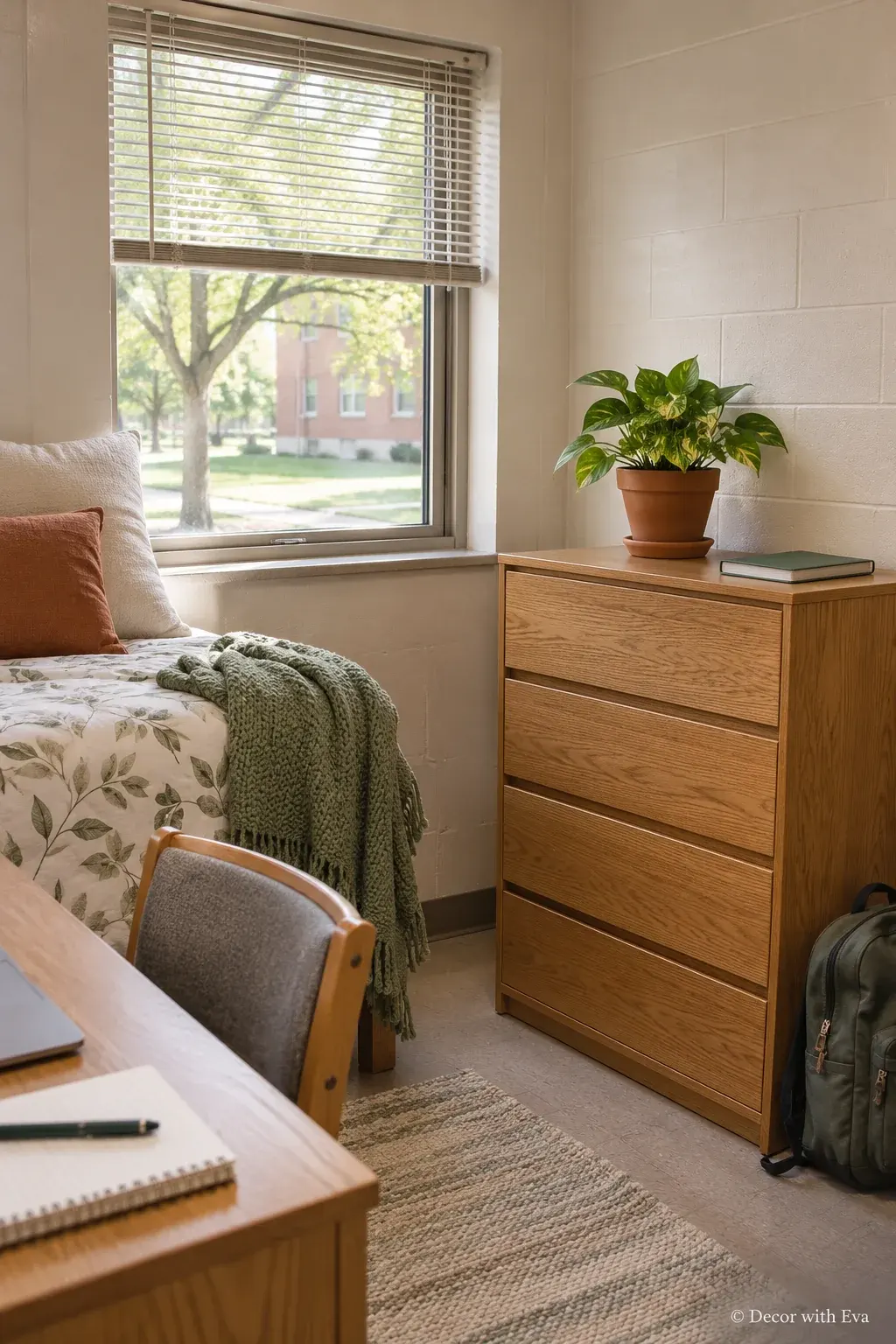
One plant can soften all the hard edges of a room. Give it a deliberate spot on the dresser near the window, with enough empty space around the pot to see its shape. A simple terracotta or reused ceramic pot keeps the look relaxed.
Choose a plant for the light the room actually gets and the care you can manage during breaks. Use a saucer and protect the furniture from water. A small faux plant is a sensible styling alternative in a dark room; skip the promise that a single plant will purify the room’s air.
Make it your own: Bring a plant you already care for, or make a paper-leaf arrangement for a low-maintenance version.
15. Coordinate with a Roommate Without Matching Everything
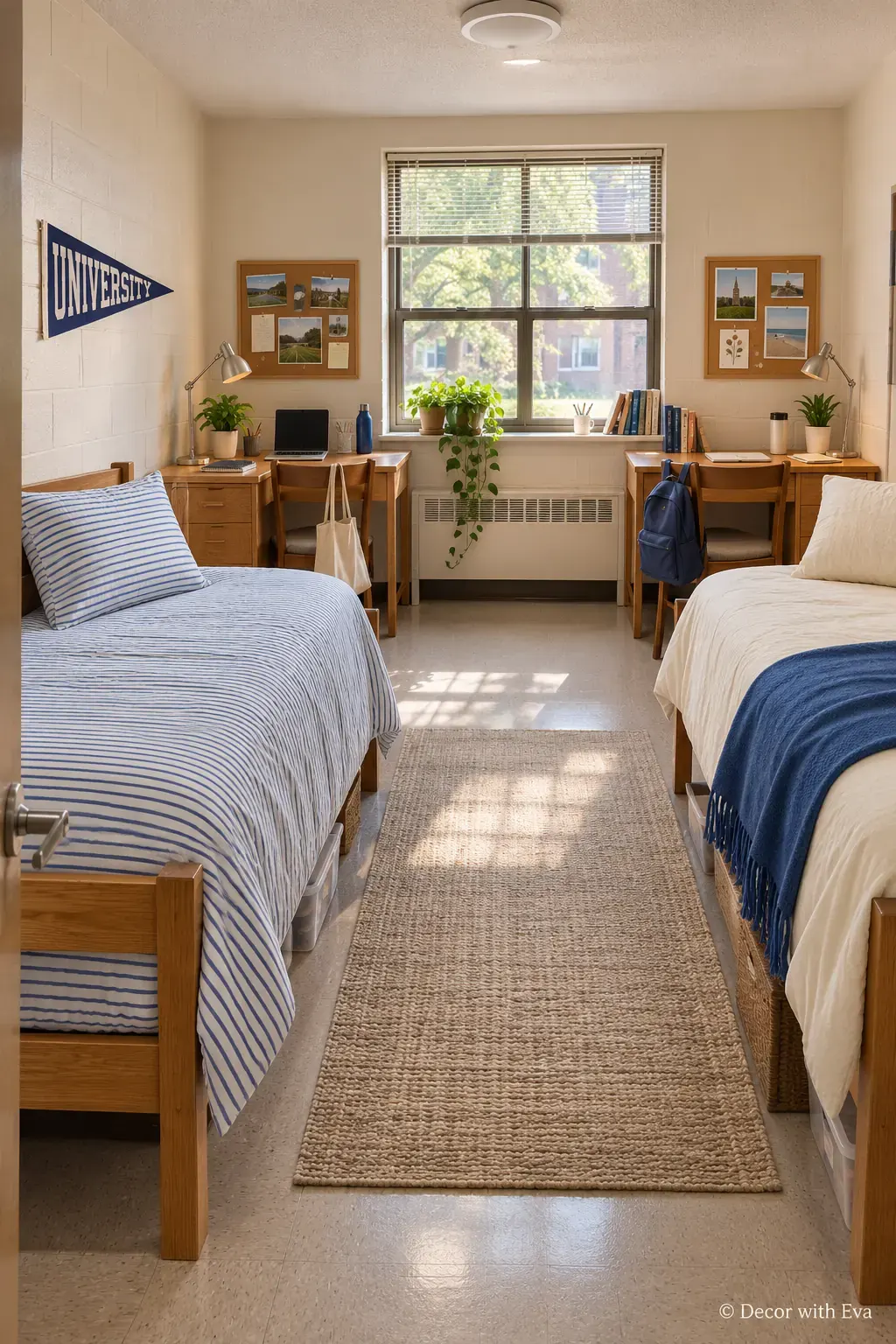
A shared room can feel intentional even when the two sides have different personalities. Agree on one connecting color or a similar background, then let each person choose their own pattern. Blue stripes on one bed and a plain blue throw on the other are enough to make the room feel related.
Discuss the shared floor area, lighting and who brings larger items before buying duplicates. Keep individual displays on each person’s side and leave both desk chairs usable. A common palette should make decisions easier, not turn the room into a decorating negotiation over every pencil pot.
Make it your own: Lay out both people’s existing bedding and look for one color they already share.
Selected Blue Stripes 2 cover measures 68 × 90 inches and comes with one 20 × 26-inch pillow cover. The duvet insert and sheets are not included. Compare both your mattress and insert measurements; Twin XL in a title does not make every bedding piece interchangeable.
16. Turn a Pinboard into a Working Mood Board
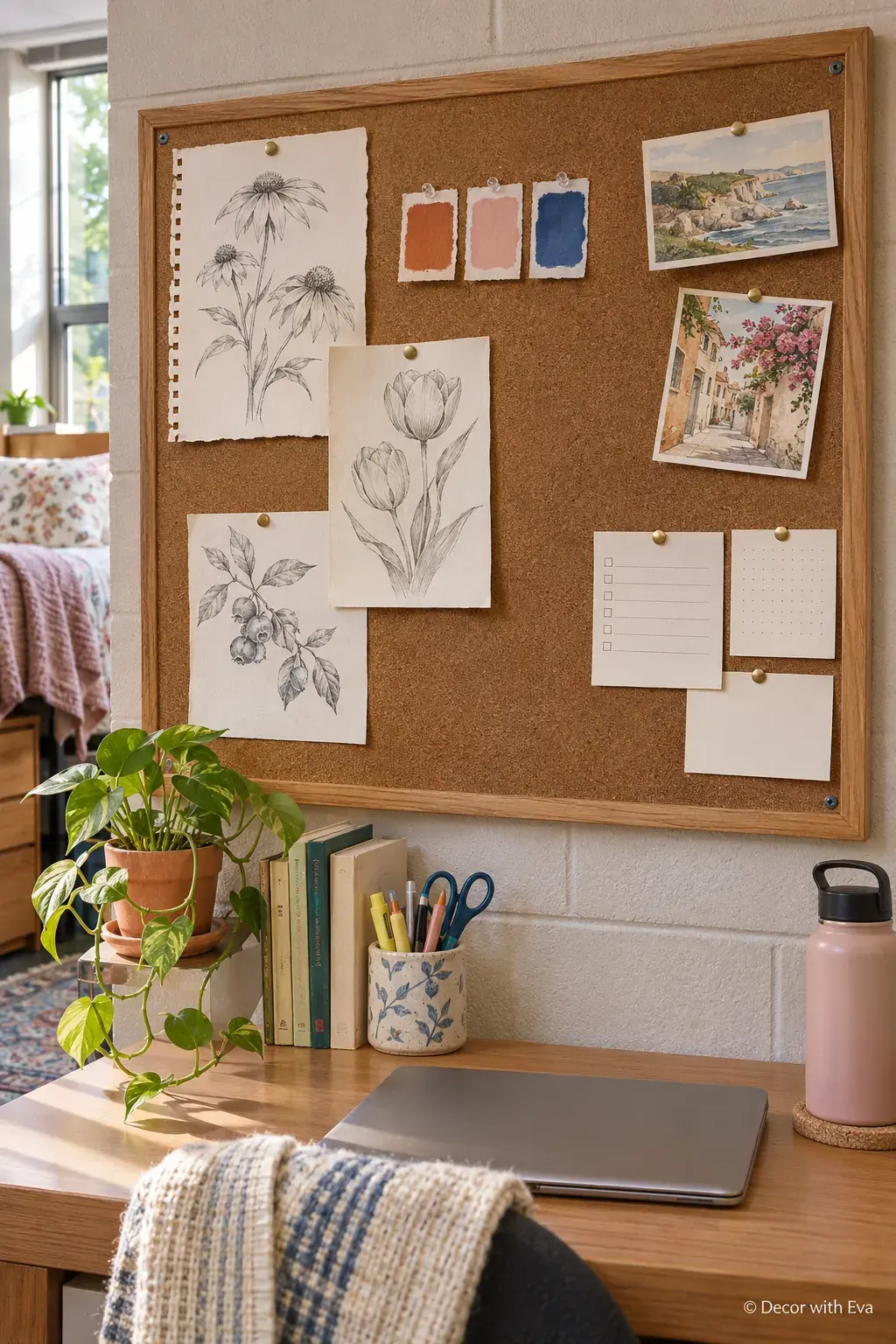
A mood board can be both decoration and a place to think. Gather a few color swatches, sketches, postcards and ideas for the project you are working on. The mix feels more personal when it reflects what you are actually making rather than a ready-made aesthetic pack.
Give the board one practical zone for this week’s notes and another for inspiration. Use different paper sizes, but leave some cork visible so it does not become visual static. Mount only where permitted, or use the board already provided with the room.
Make it your own: Pin your own sketches and scraps from packaging rather than ordering a collage kit.
17. Make a Hobby the Most Personal Thing in the Room
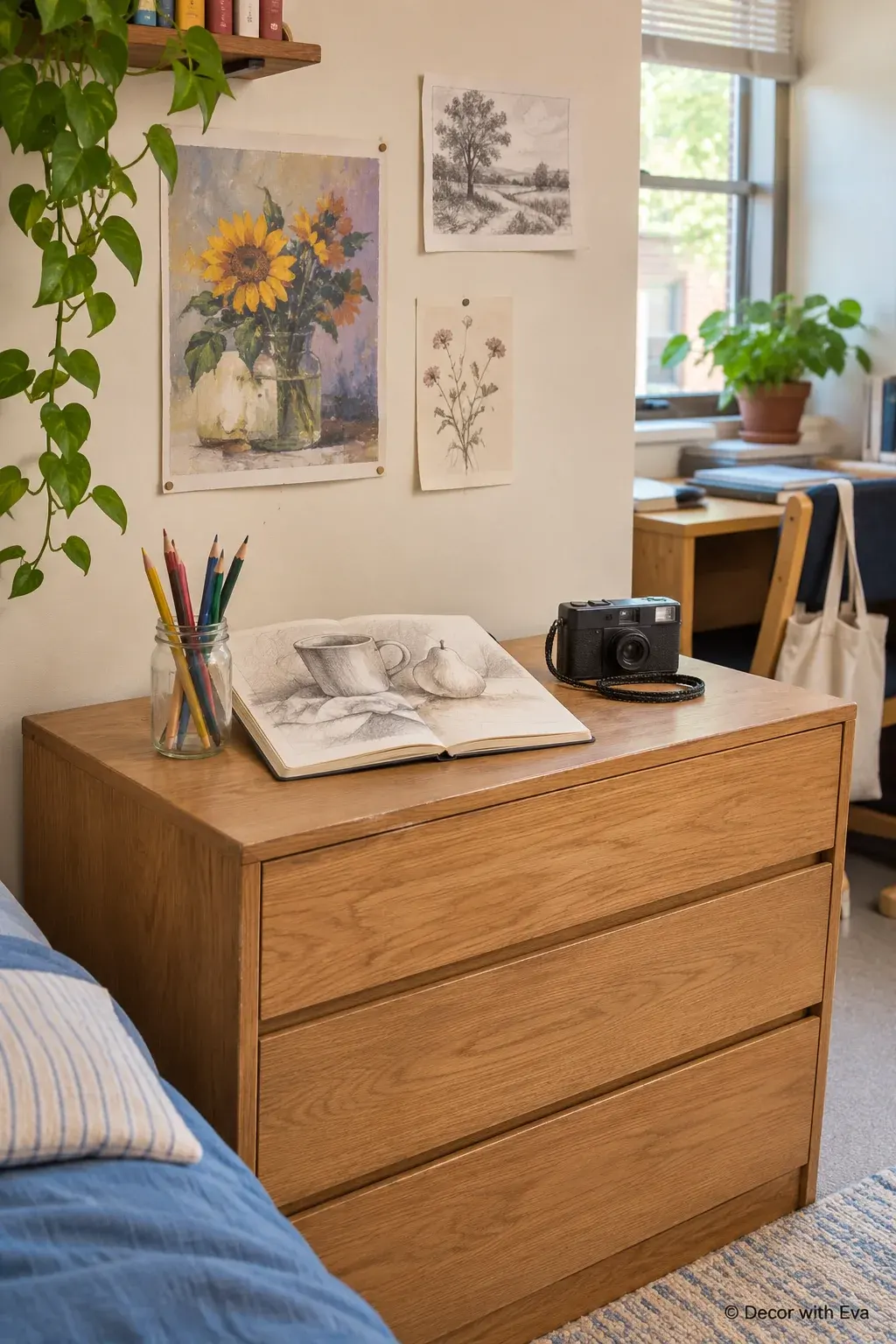
A camera, a sketchbook or a small collection can tell more about you than a generic slogan. Choose one interest and give it a tidy place to live. A drawing in progress beside a jar of pencils makes a creative corner feel used rather than staged.
Use the furniture you have and keep delicate equipment out of direct sun. Large or heavy items need their proper storage, not a decorative hook added without permission. Keep the display small enough that you can still pick up the thing and use it.
Make it your own: Choose your most-used hobby supplies and put the rest away.
18. Give Laundry a Deliberate Place
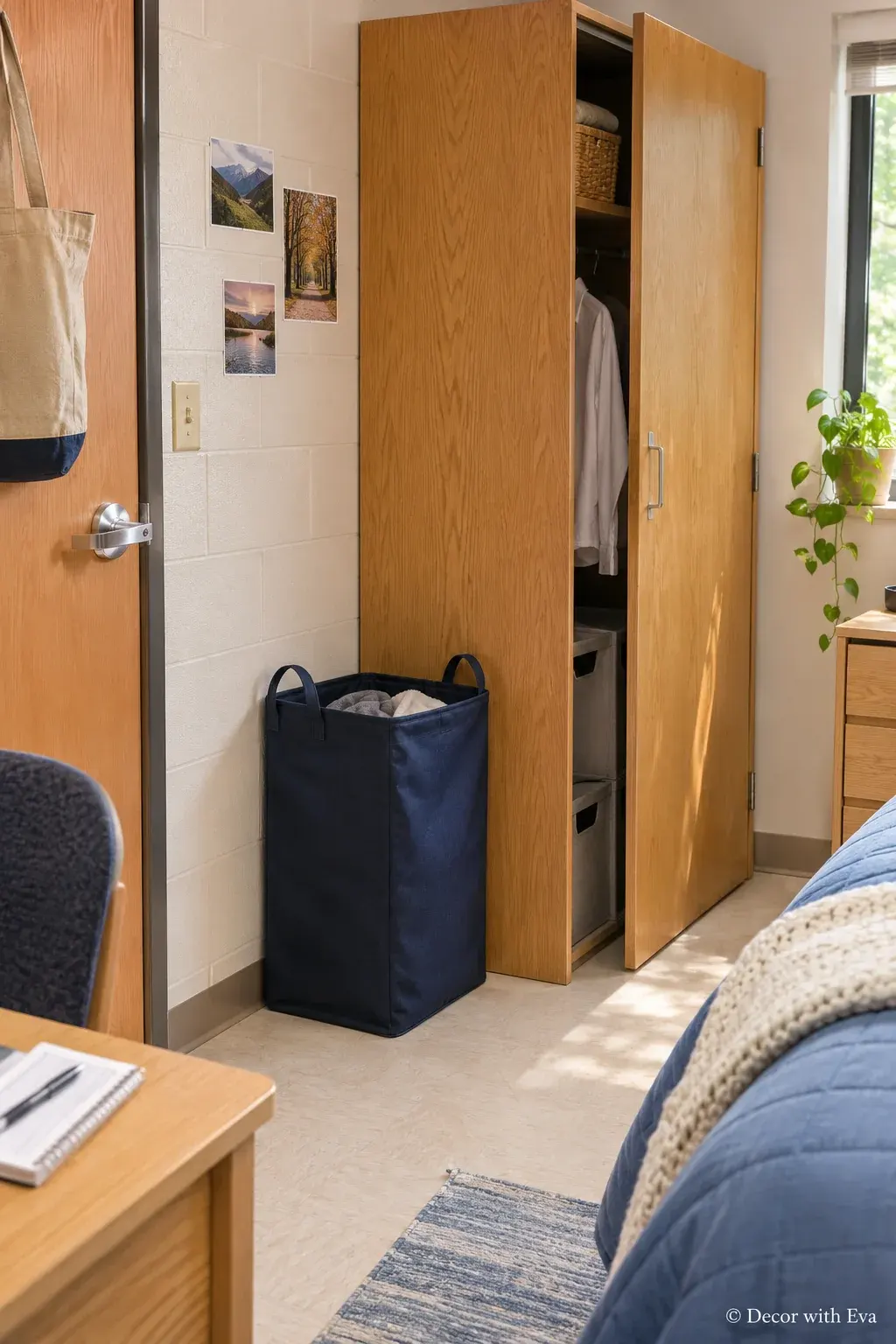
A hamper is not the glamorous part of decorating, but a pile of clothes changes the feeling of the whole room. Put a simple fabric bag or basket where clothes naturally land. A color that works with your bedding makes the daily routine look less accidental.
Keep it where you can reach it without stepping around the desk chair. A soft-sided bag may pack away more easily at the end of term than a rigid bin. Leave damp towels to dry appropriately before putting them with laundry, and keep the closet door able to open.
Make it your own: Use the laundry bag you brought and add a neat folded rim or simple cloth label.
19. Make a Study-to-Break Tray
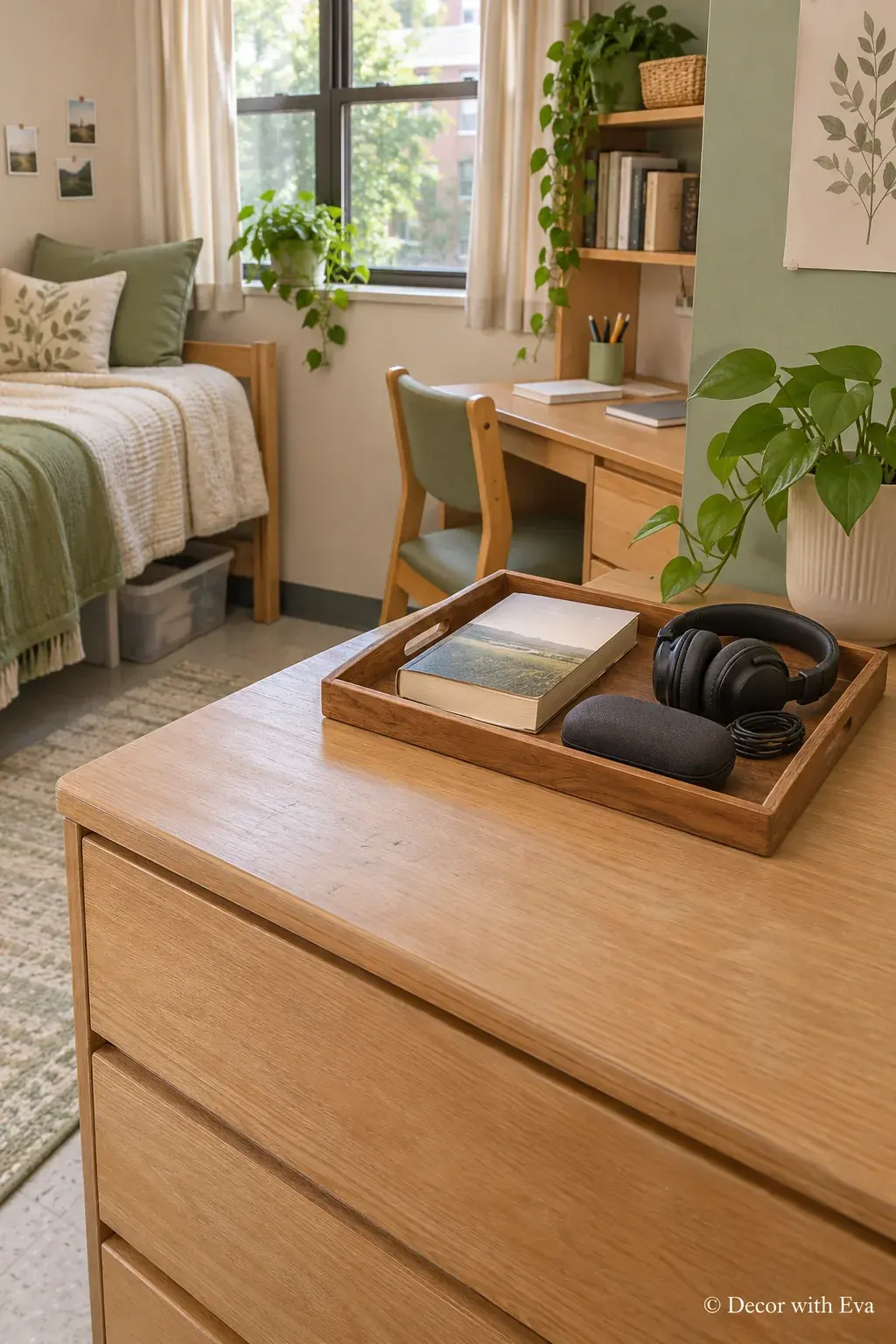
A shallow tray can gather the little things that otherwise spread across every surface. Keep a book, glasses and headphones together on the dresser, then move the tray when you need that space. The tray’s boundary makes a small group feel considered.
Choose something light enough to carry with one hand and small enough to leave the rest of the surface useful. Keep charging devices on a hard, open surface according to their instructions rather than burying them under a blanket or inside a fabric basket.
Make it your own: Reuse a serving tray, a shallow box lid or a plate you no longer use for meals.
20. Style a Compact Off-Campus Reading Corner
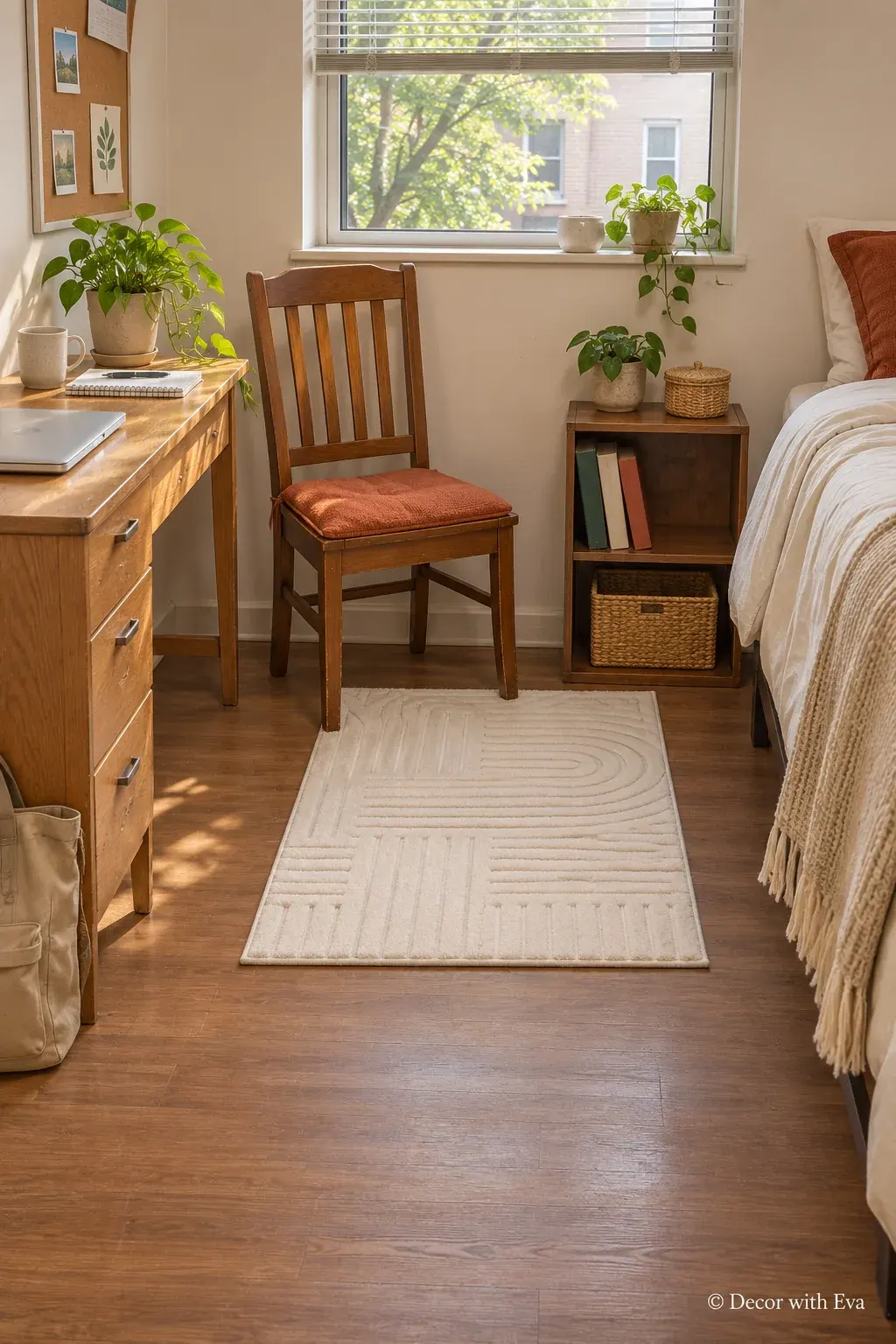
If your room already has a spare chair, let it become a place to take a real break from the desk. A cushion from the bed and a small stack of books can make that chair feel like a choice. Use a compact corner that still leaves a clear route through the room.
This idea suits a room with spare floor space; a tight shared dorm may be better with one comfortable bed cushion instead. Keep the chair you have before ordering another piece of furniture. A small rug can mark the spot, but it should lie flat rather than curl beneath the legs.
Make it your own: Move an existing chair by the window for a week and see whether you use it.
Selected 2 × 3-foot rug has a raised arch pattern, a cotton/polyester blend and TPR-coated backing, with pile listed up to about 0.4 inch. Check backing compatibility and the current care label. Reviews across other sizes include creases and mixed grip feedback, so allow it to lie flat before use.
21. Finish with a Five-Minute Room Reset
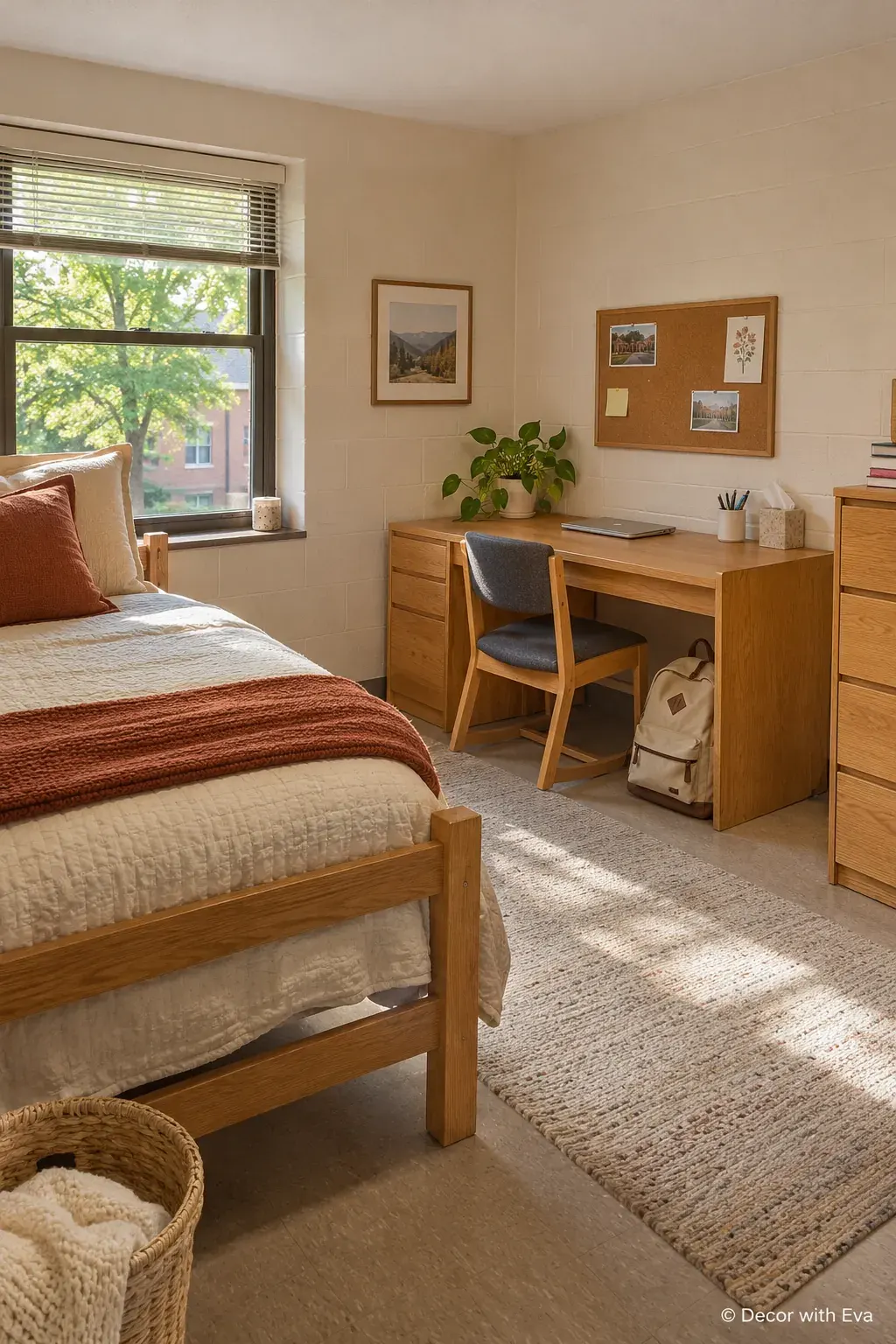
The last decorating idea costs nothing: make the useful things easy to put back. Choose a home for your bag, clear the middle of the desk and fold the throw instead of arranging ten cushions. A room looks more like you when the things you love are visible and the unrelated clutter has somewhere else to go.
Try living with the arrangement for a few days before shopping again. If you keep moving the same item out of the way, it probably needs a different spot. Keep one surface partly empty; in a student room that spare space will soon have a very practical job.
Make it your own: Take a quick photo before buying anything and move just three items that make the room feel crowded.
What Should You Decorate First?
Start with bedding if the bed takes up most of the view. Start with the desk if clutter makes studying awkward. If both already work, a small personal display may do more for the room than another storage purchase. Choose the change that improves an ordinary day.
How Can You Keep the Budget Down?
Bring the lamp, cushions, frames and storage you already own, then fill only the gaps that remain. Keep packaging sizes and room measurements handy before buying. A matching set is useful only when you need the pieces in it; a reused tray or pencil pot can be just as effective.
A Room That Feels Like Yours
Let the room show a few things you care about, and give the everyday essentials a sensible place to live. The best arrangement leaves space for studying, relaxing and changing your mind. Start small, live with it, and let your own habits shape what comes next.
If your off-campus apartment also has a tiny outdoor space, our small apartment balcony ideas explore compact seating and planting beyond the bedroom.