This article contains paid links. As an Amazon Associate, I earn from qualifying purchases. Linked selections are based on product-listing and customer-review research, not hands-on testing.
The floor is often the largest uninterrupted surface on a small balcony. Change its color or texture and even the same old chair can feel as though it belongs in a different space. You might want warm wood underfoot, a rug that softens concrete, or a more permanent finish for a balcony you own.
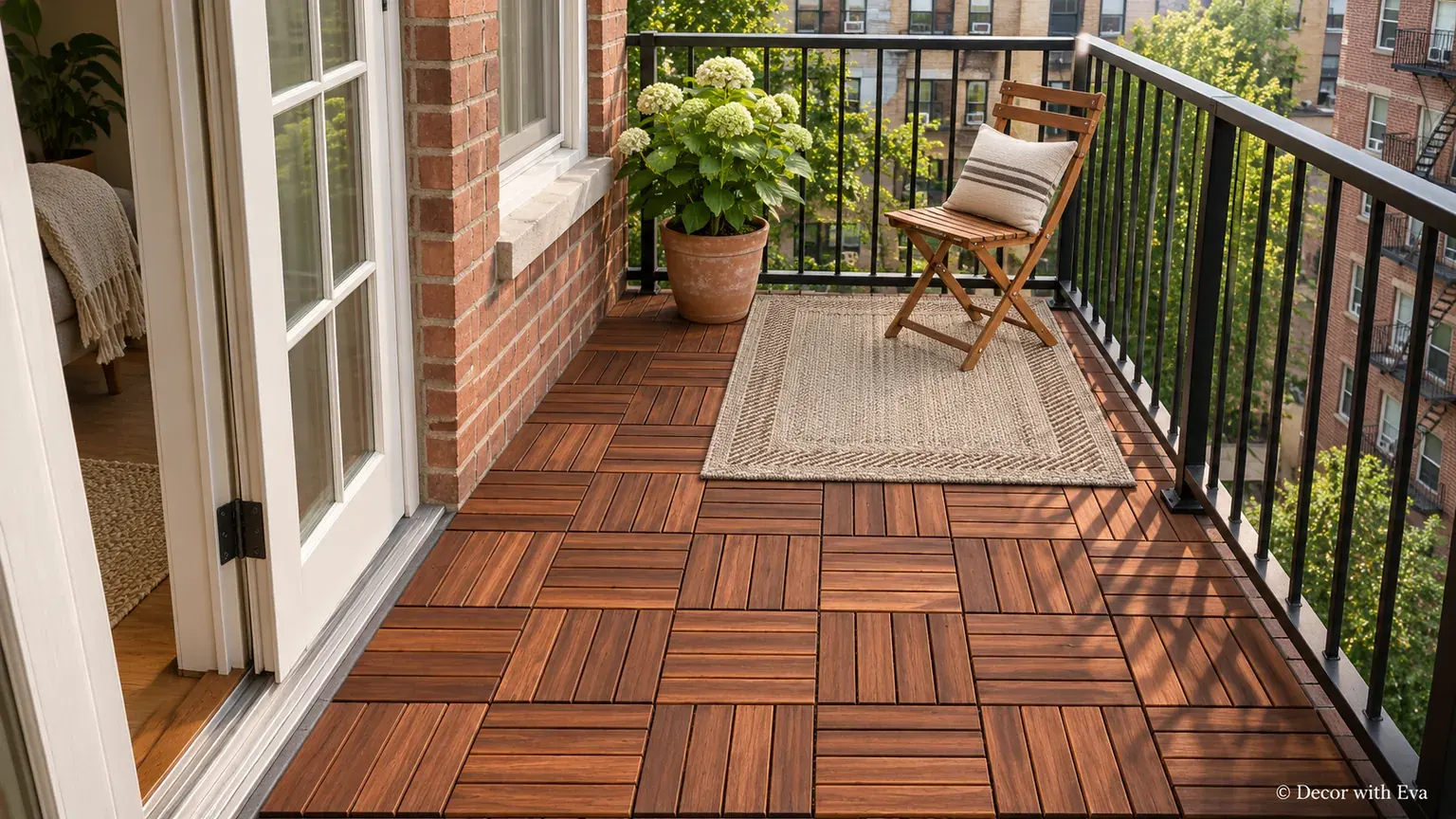
These small balcony floor ideas mix materials, patterns and ways to use a limited footprint. Some are removable updates; painted and fixed-tile looks need permission and a suitable installation. Choose one direction that works with the floor you have, the weather it gets and the amount of upkeep you want.
The images are AI-created styling illustrations, with selected product photos used as appearance references where products are linked. They are not tested installations or complete sets sold together. Chairs, tables, pots and plants are separate styling props. Permanent-floor illustrations show design directions rather than specified construction systems.
Choose the Floor Around the Balcony You Have
Measure the usable floor, the full door swing and the clearance beneath the door before choosing a covering. Check your building’s rules, the existing surface and its drainage. A pretty new layer should not hide damage, block a drain or interfere with the waterproofing.
Balcony-floor supplier Archatrak’s system guidance highlights drainage, height transitions and substrate conditions as part of choosing an assembly. Ask the owner or a qualified professional about load, fire and waterproofing requirements before changing the floor. Removable does not automatically mean suitable for every balcony.
1. Warm Up Concrete with Brown Wood Tiles
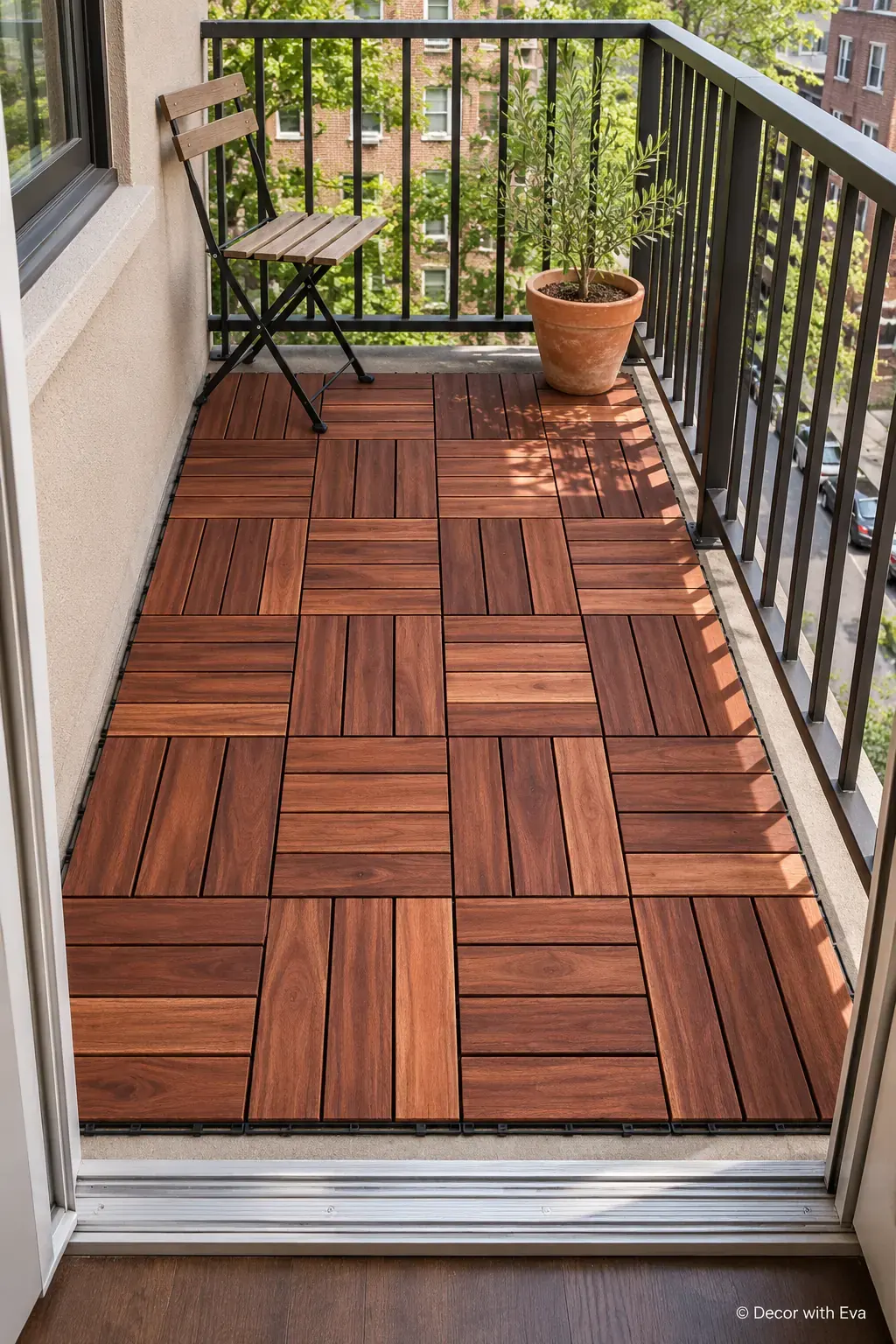
A little warm wood can change the whole feeling of a balcony. These square acacia tiles use crossed groups of slats, giving the floor a parquet-like rhythm without adding a busy rug. Keep the rest simple: one folding chair, a small table and a pot tucked into the corner.
Start with a dry layout before cutting anything. The selected tiles are roughly a foot square and nearly an inch high, so a balcony door that already skims the floor may rule them out. Use only on a sound, compatible base, leave drainage accessible and follow the wood-care instructions rather than expecting a maintenance-free finish.
Make it your own: Try a sample tile beside your furniture first. A small area can help you judge the color before ordering the full floor.
Ten nominal 12 × 12-inch acacia tiles in the crossed pattern, about 10 square feet per box. Listed total height is 0.9 inch. Requires a firm, even base and periodic finish care; measure door clearance and confirm compatibility with your existing surface.
2. Try Composite Tiles with an Alternating Slat Pattern
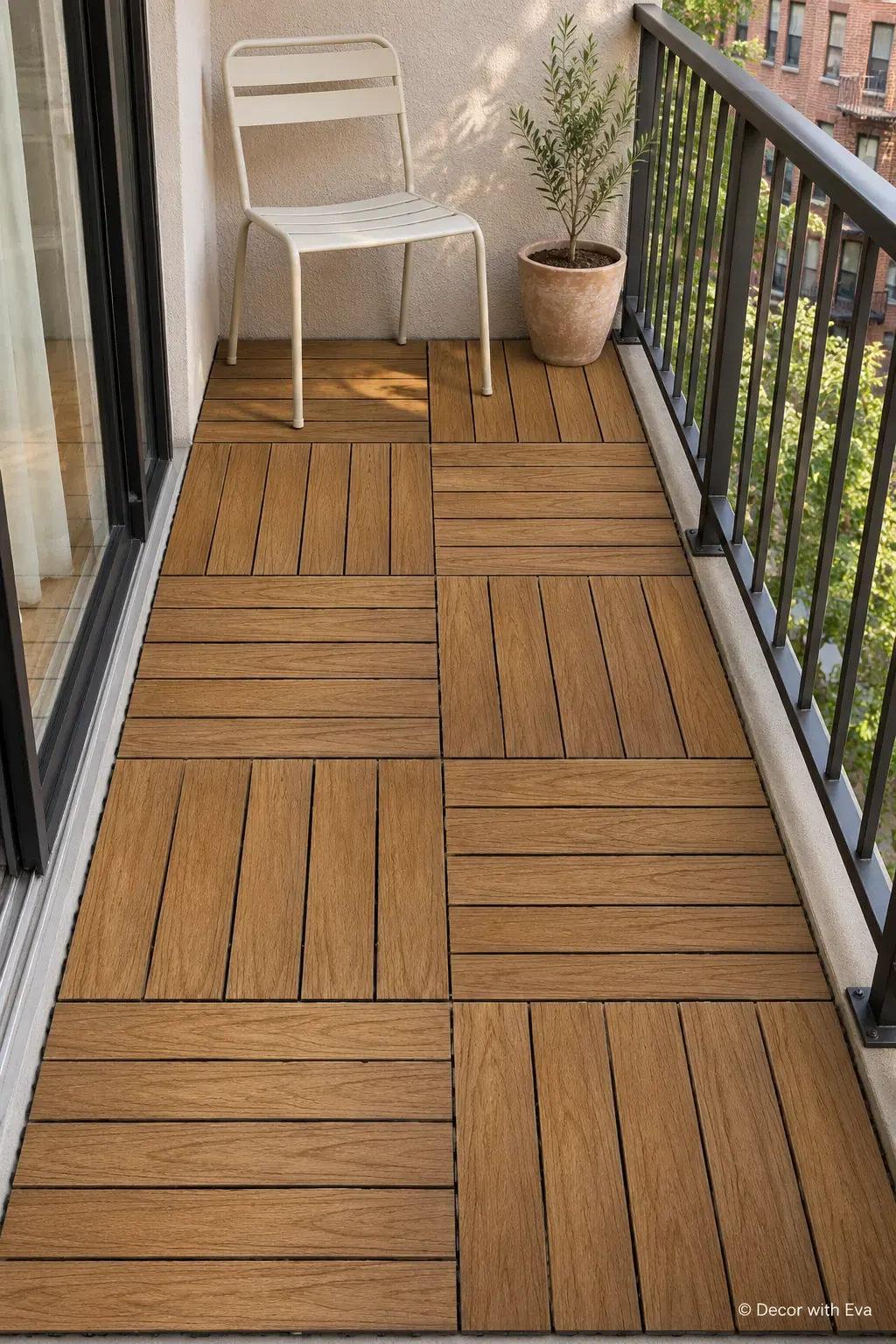
Composite tiles offer a different route to the warm, wood-grain look. Turn compatible squares in alternating directions to create a simple woven effect across the floor. The changing lines add interest even when the furniture and planting stay quiet.
Keep to one tile system; similar-looking connectors from different brands may not fit. The selected composite combines wood fiber and plastic, so it is not the same material as solid timber. Confirm the finished height, pack coverage and available edging, then check that the base remains accessible for cleaning and inspection.
Make it your own: Use the same color throughout and let the slat directions provide the pattern.
Ten nominal 1-foot-square composite tiles in the selected Peruvian Teak brown wood-grain color, with four slats per square. Wood fiber and HDPE with a polymer coating. Connect only with the compatible NewTechWood system; confirm pack coverage, finished height and required edge pieces before ordering.
3. Make a Statement with a Diamond-Check Rug
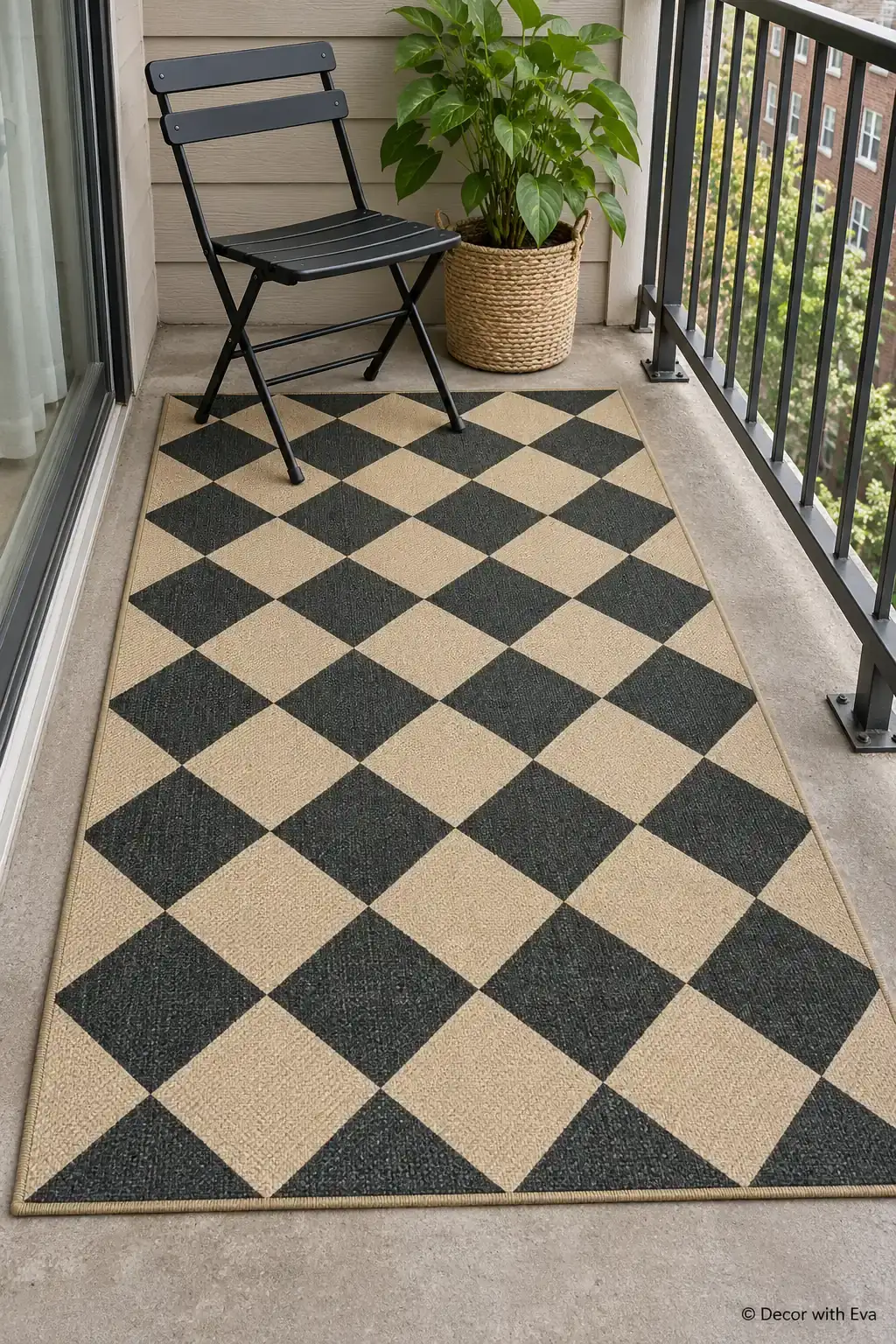
A charcoal-and-tan check brings a little café character to an ordinary concrete floor. Choose a pattern large enough to read from the doorway, then give it room to show. A slim black chair and one leafy plant are enough to finish the scene.
This is the removable patterned layer, not a tiled installation. The selected rug is polyester with a jute-like texture, and its dark checks may read softer than true black. Measure the actual rug against the door swing, smooth every edge and bring it inside when the balcony is wet or windy. A backing described as non-slip is not a wind anchor.
Make it your own: Borrow an outdoor rug you already have and see whether its pattern carries the space before buying more decor.
Selected nominal 3 × 5-foot polyester rug with a jute-like texture and rubber-strip backing. It is not natural jute. Listed thickness measurements conflict, so check actual door clearance. Use in a sheltered spot and lift to dry; a customer reported wind lifting a larger variant.
4. Run a Bordered Runner Along a Narrow Balcony
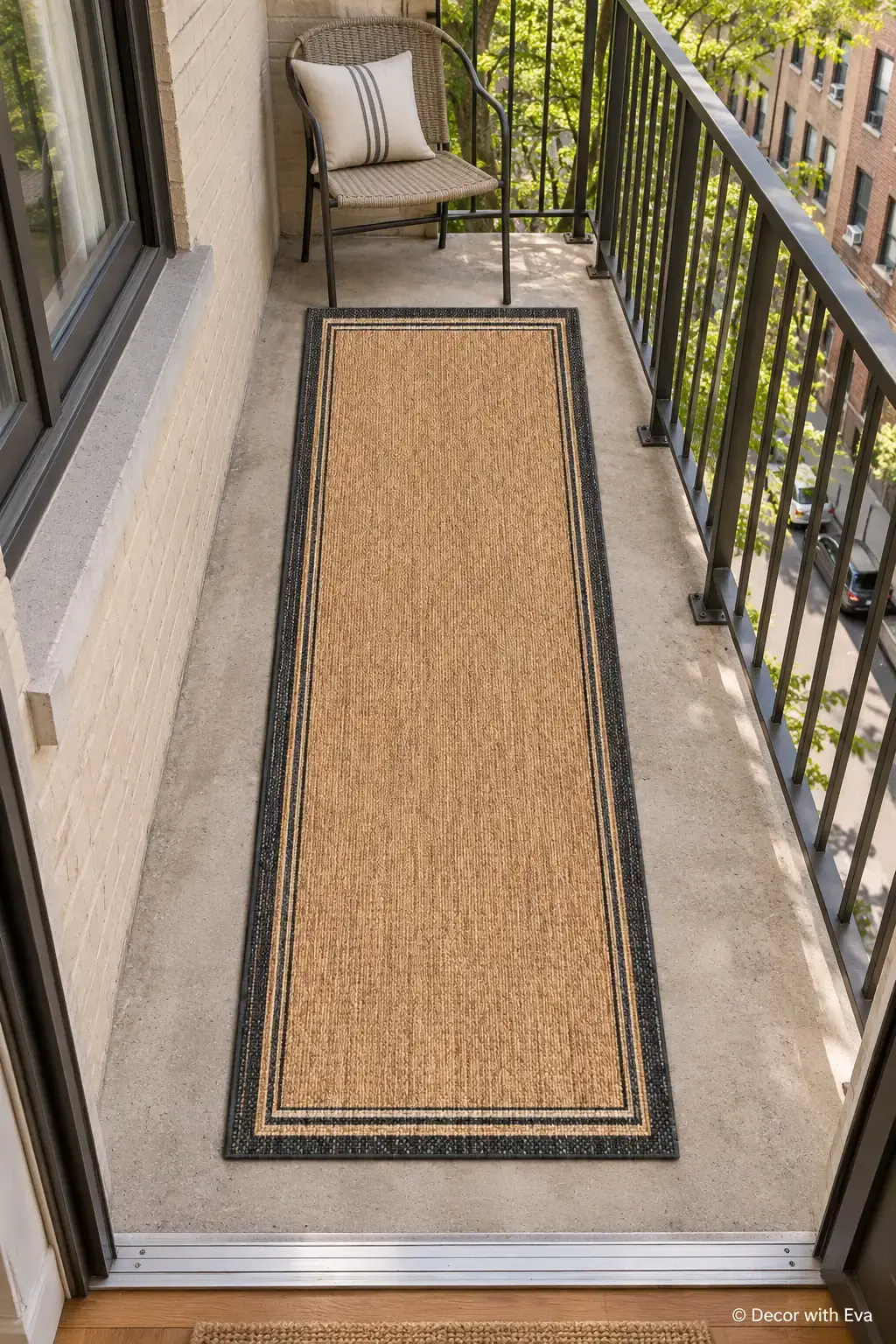
A runner can give a long, slim balcony a clear visual center. The dark border frames the walking space while the warm tan middle adds texture. Leave a visible strip of the existing floor on both sides so the runner looks deliberately fitted rather than squeezed in.
Check the listed measurements rather than relying on the size name: this runner is twenty-six inches wide and six feet long. Tape that outline on the floor first and open the door fully. Keep the ends away from the threshold and drain, and use only a pad or backing approved for both outdoor use and the underlying surface.
Make it your own: Position furniture at one end so the long border remains visible.
The selected runner is listed as 26 × 72 inches, despite the rounded 2 × 6-foot name. Polypropylene flatweave, approximately 0.2-inch pile. Check a suitable backing or outdoor pad for your surface and keep the ends flat.
5. Give a Plain Floor a Soft Navy Accent
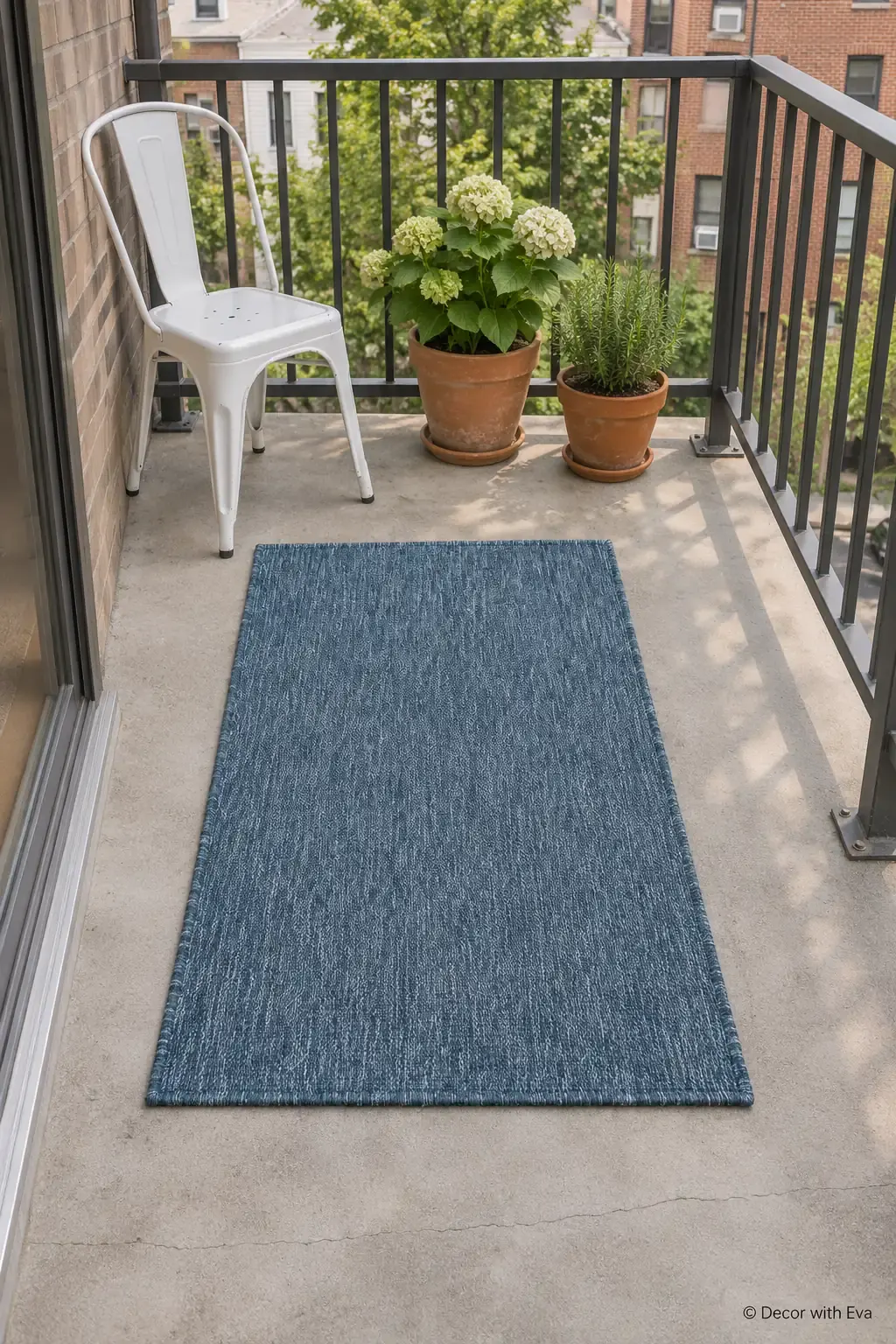
A blue rug can bring color down to floor level without turning the balcony into a themed room. A softly mottled navy surface looks relaxed beside pale concrete, white metal furniture and a couple of green pots. It is a useful option when a strong geometric pattern would feel too busy.
The selected accent size is small, so treat it as a patch of color near one chair rather than a rug that holds an entire dining set. Leave enough room for the chair to stand steadily. Lift the rug after rain and let the underside and floor dry; clean-looking fabric can still hold moisture underneath.
Make it your own: Repeat the blue just once, perhaps in a cushion you already own.
Selected nominal 2 × 3-foot-7-inch navy synthetic outdoor accent rug. Low pile, with subtle mottled texture. Follow the care label, let rug and floor dry, and store when not in use; outdoor suitability does not make a rug windproof.
6. Soften Straight Lines with a Scalloped Border
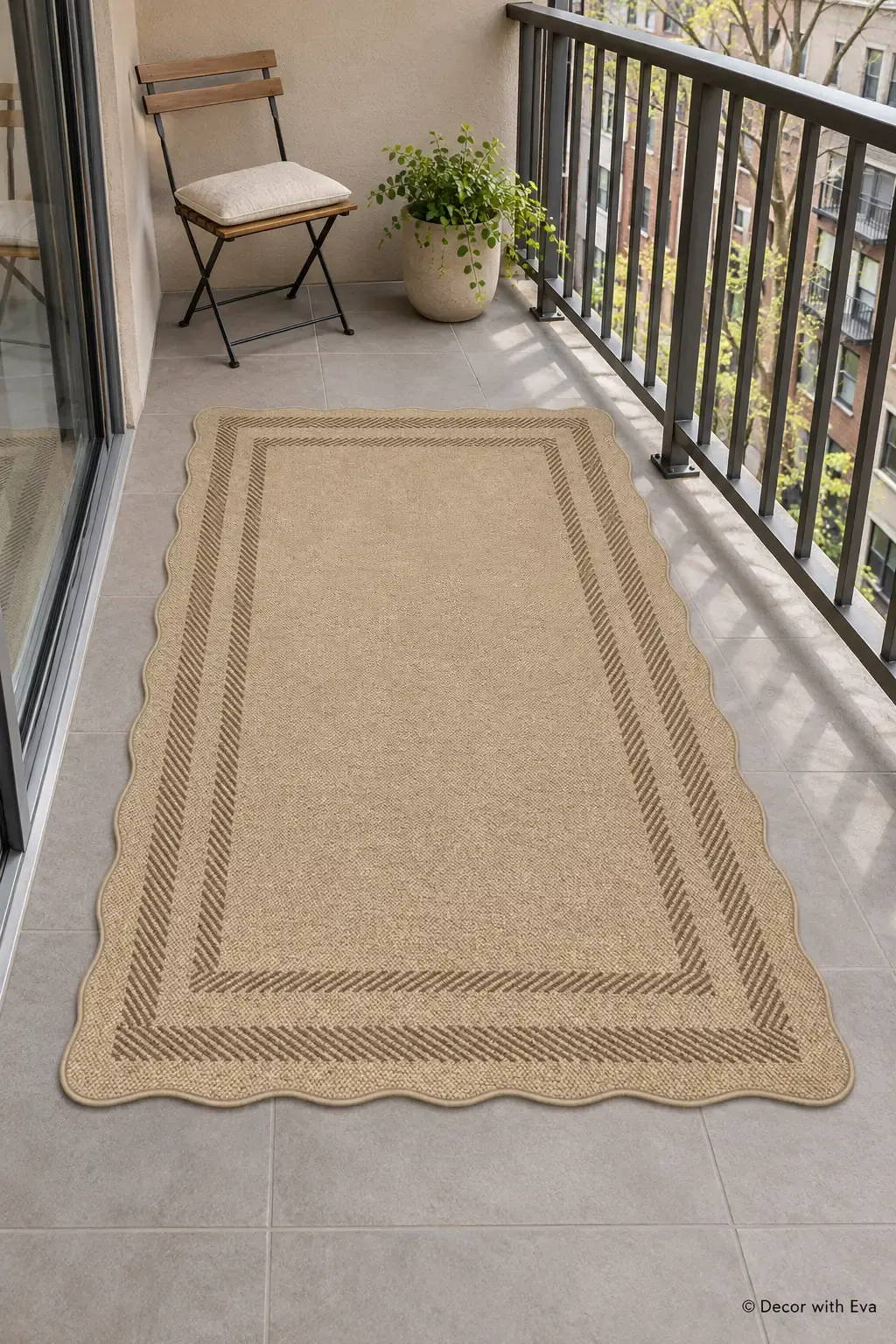
Balconies are full of straight edges: door frames, railings, floor joints and furniture legs. A rug with a gently wavy outline interrupts that grid. Keep it in a quiet tan shade so the shape, woven texture and subtle border do the work.
This natural-looking rug is polyester, not jute. Use the selected three-by-five-foot size only where it can lie flat without curling against the wall or door. A covered balcony is the better setting for this illustration. Let delivery creases settle before placing it in a walking route, and check the backing against your floor manufacturer’s care advice.
Make it your own: Clear a little space around the edge so the scalloped shape can actually be seen.
Selected nominal 3 × 5-foot tan rug with a subtle scalloped outline and patterned border. Polyester with TPE backing, not natural jute. Best used here under cover on a compatible clean, dry surface; allow shipping creases to settle.
7. Use a Round Rug on a Squarer Balcony
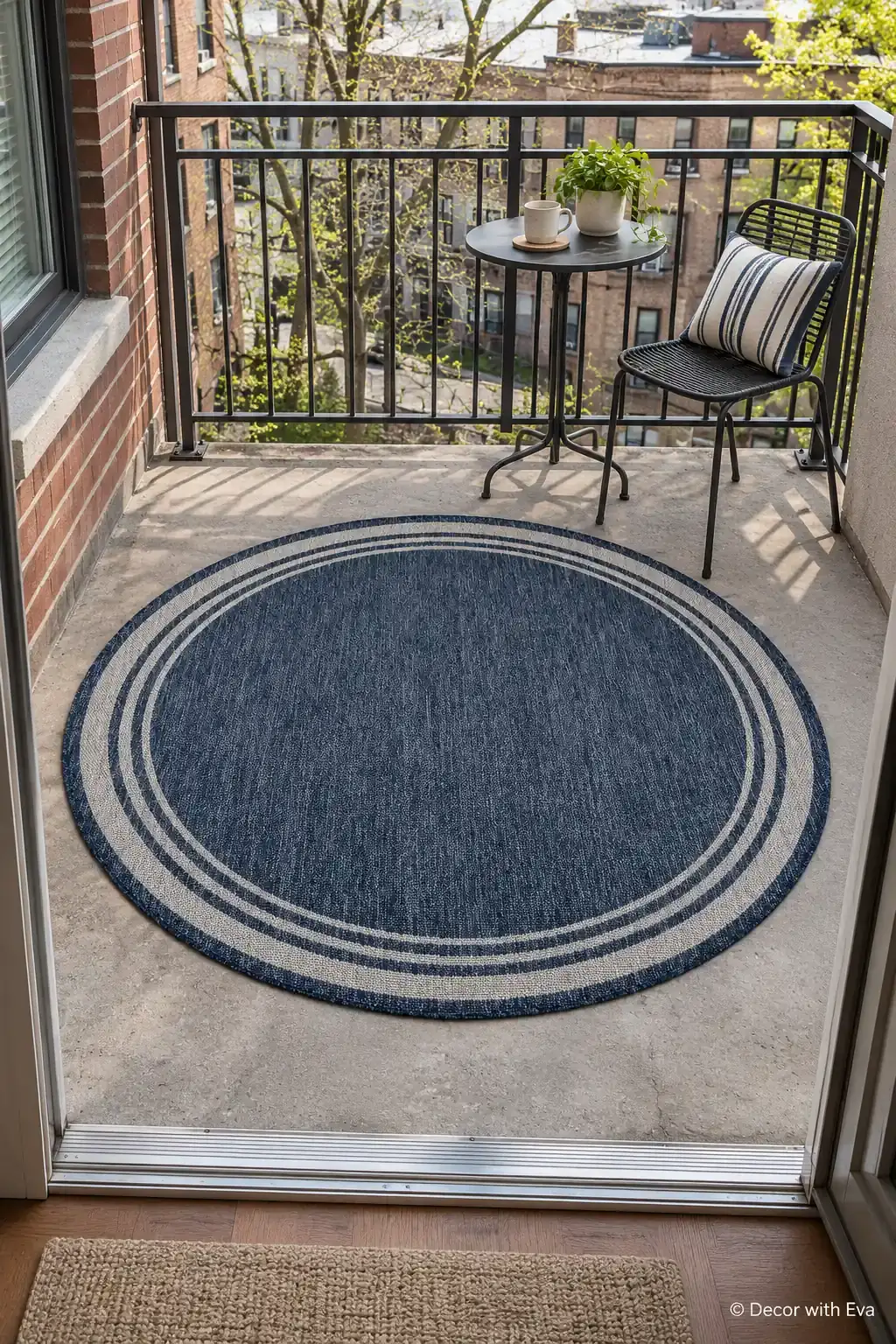
A round rug can make a compact, square-ish balcony feel less like a corridor. Its curve works especially well with a small round table, but keep the furniture light enough that the rug’s outline remains visible. Navy and a pale border give the arrangement a calm, defined center.
Round does not automatically mean small. The linked rug is five feet three inches across, so it needs a wider balcony than many apartment layouts provide. Check the actual diameter and the chair positions before choosing it. If your balcony is narrower, borrow the idea with a smaller outdoor-rated round rug rather than folding this one to fit.
Make it your own: Use a chalk or tape circle to test the size before ordering.
Selected 5-foot-3-inch round rug with a navy center and pale double border. Polypropylene over polyester backing. It needs a balcony wider than its actual diameter; measure carefully. Do not treat the listing’s waterproof or drying-time claims as guarantees.
8. Keep Things Quiet with a Beige-and-Brown Weave
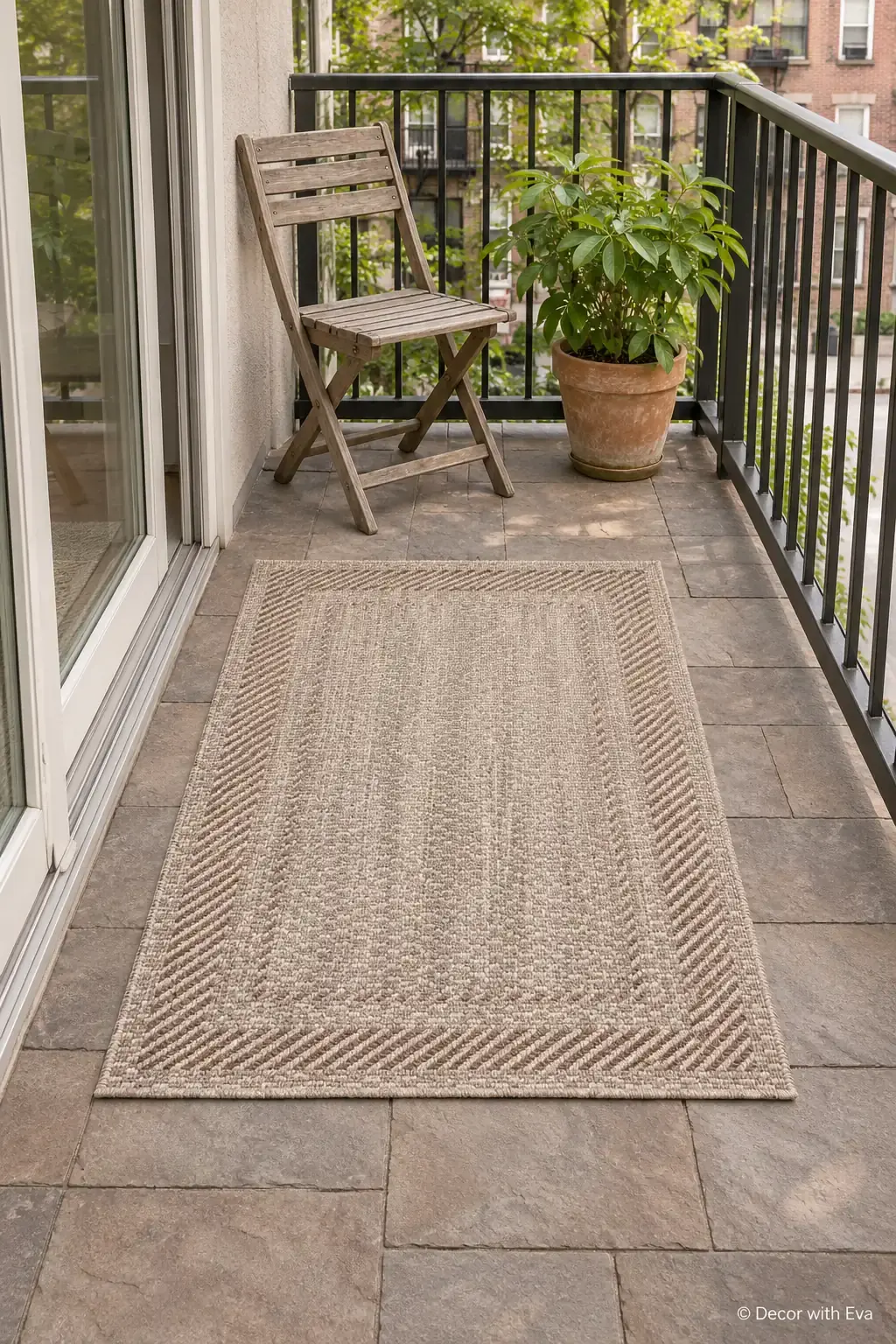
A small neutral rug adds texture without demanding another color scheme. Beige and brown work beside wood, black metal or a favorite old chair. Let a patch of the original floor show around it; the contrast between smooth concrete and woven texture is part of the appeal.
Look for a rug genuinely intended for outdoor use rather than moving an indoor jute mat outside. The selected synthetic accent rug is roughly two feet by three feet seven inches, making it a modest footrest-sized layer. Check the selected variant, keep the edges flat and let the rug and floor dry between wet spells.
Make it your own: Keep your existing chair and pots. This look depends on texture more than on new furniture.
Selected nominal 2 × 3-foot-7-inch beige-and-brown synthetic outdoor accent rug. Check the exact selected size, use a compatible outdoor pad if needed, and lift it to clean and dry underneath.
9. Layer a Small Rug Over a Wood Floor
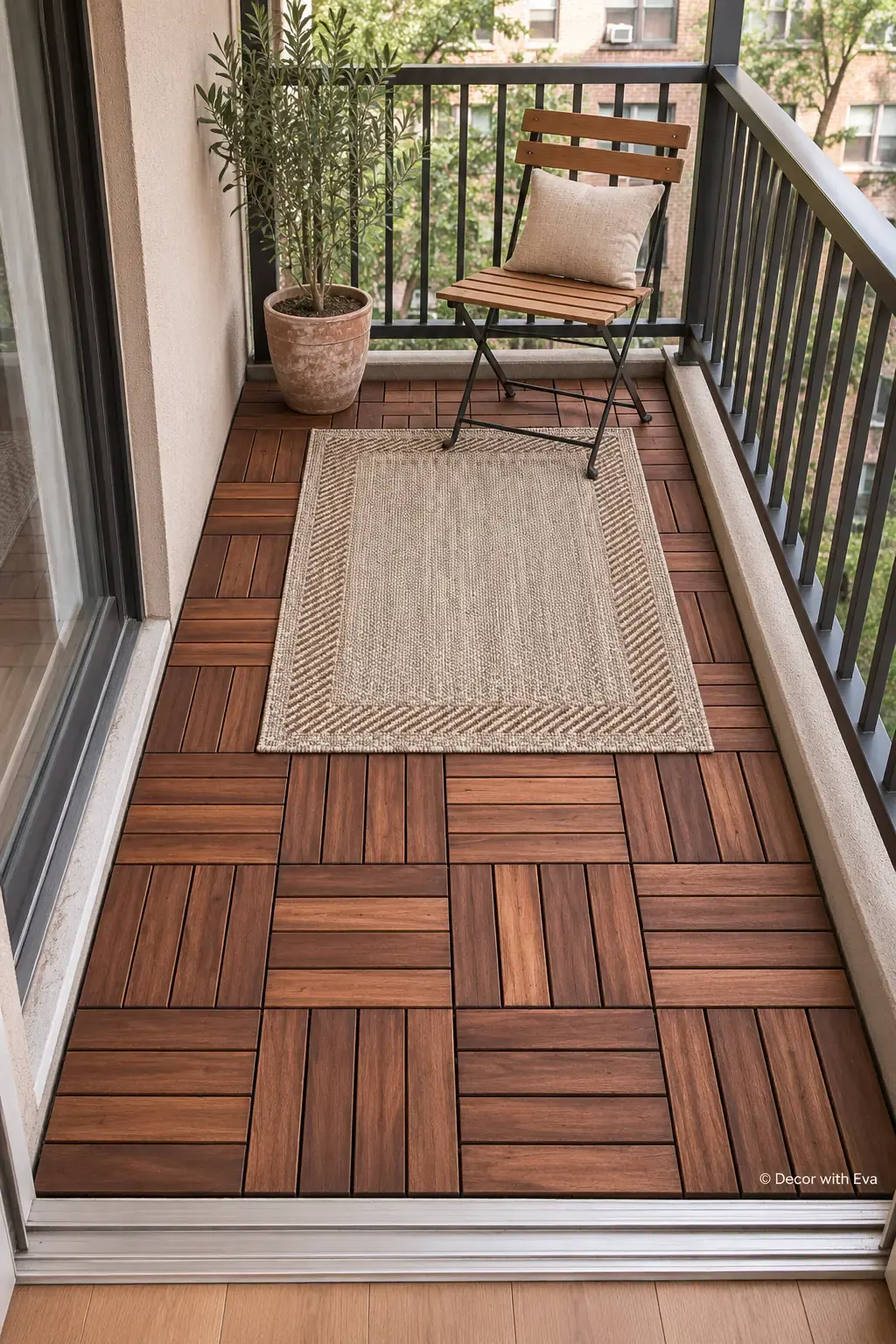
A little woven rug can break up a full wood floor and mark the place where you sit. Keep it small enough to leave the tile pattern visible around all sides. The combination feels warmer and more lived-in than hiding every inch of wood beneath a large mat.
Treat this as two layers to maintain, not a shortcut to a permanently dry floor. Check that the rug backing or pad is compatible with the decking finish, lift it regularly and let both layers dry. Include both thicknesses when checking the door clearance. On an exposed balcony that stays damp, one layer may be the more practical choice.
Make it your own: Try this with an outdoor rug you already own, or leave the wood bare when the weather turns wet.
Ten nominal 12 × 12-inch acacia tiles in the crossed pattern, about 10 square feet per box. Listed total height is 0.9 inch. Requires a firm, even base and periodic finish care; measure door clearance and confirm compatibility with your existing surface.
Selected nominal 2 × 3-foot-7-inch beige-and-brown synthetic outdoor accent rug. Check the exact selected size, use a compatible outdoor pad if needed, and lift it to clean and dry underneath.
10. Add a Small Patch of Artificial Grass
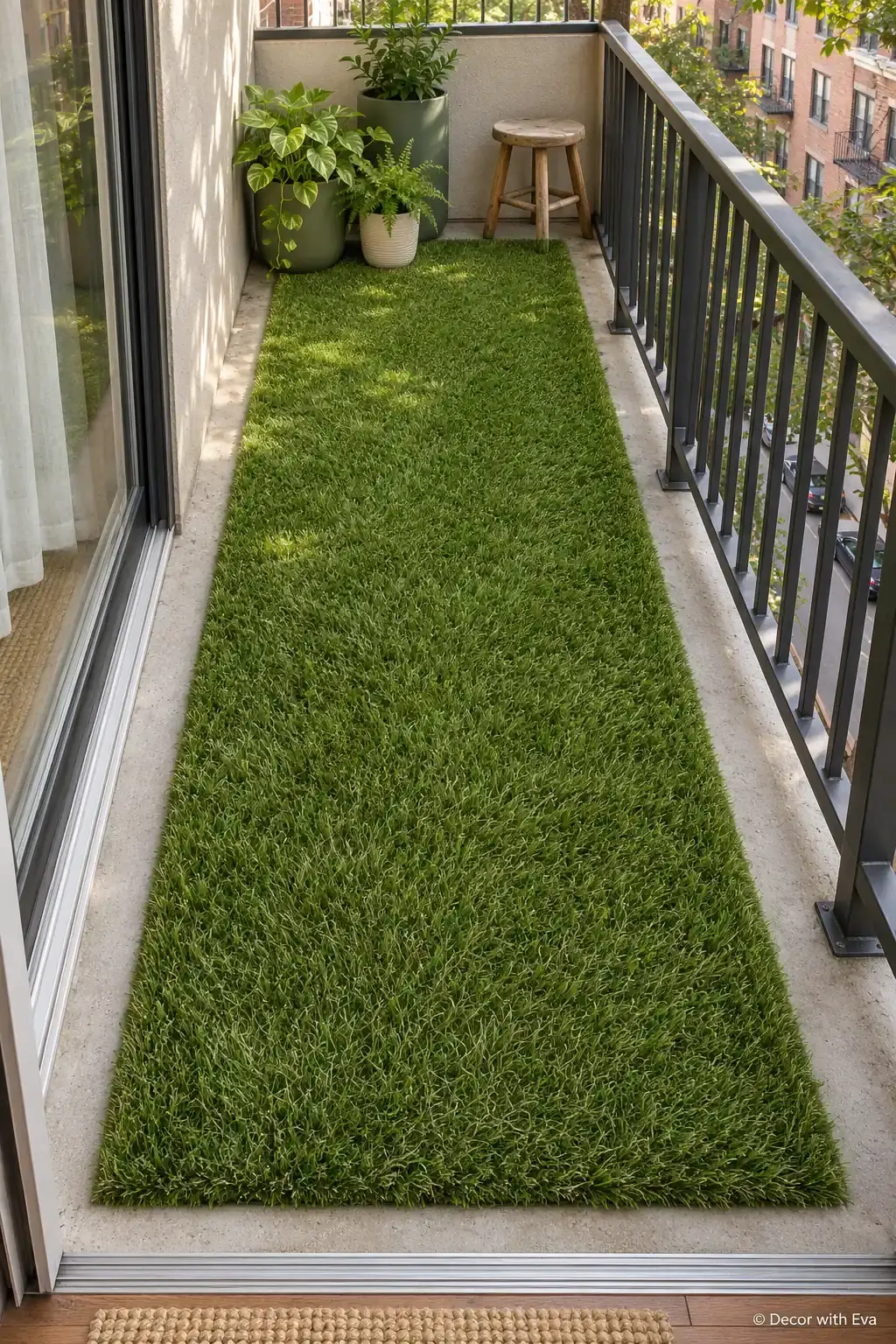
A little green underfoot can make a balcony feel more like a garden, especially beside a few real plants. Keep the turf to a clearly defined area that you can lift and clean. A modest patch is easier to inspect than a wall-to-wall layer hidden beneath pots and furniture.
Use turf only where the building and existing floor allow it. Drainage holes in a backing do not guarantee that the entire balcony will drain properly, and synthetic grass can become hot in sun. Follow the cutting instructions, keep edges flat and leave the actual drain accessible. This is a decorative surface, not a living lawn or a repair for a leaking floor.
Make it your own: If your balcony stays shaded and damp, choose a smaller removable outdoor mat instead.
Selected 31-inch × 8-foot synthetic grass runner with listed 1.1-inch pile and drainage holes. It is artificial turf, not a living lawn or a waterproofing layer. Verify backing compatibility and finished dimensions; trim only as permitted by the product instructions.
11. Let Clean Concrete Be Part of the Design
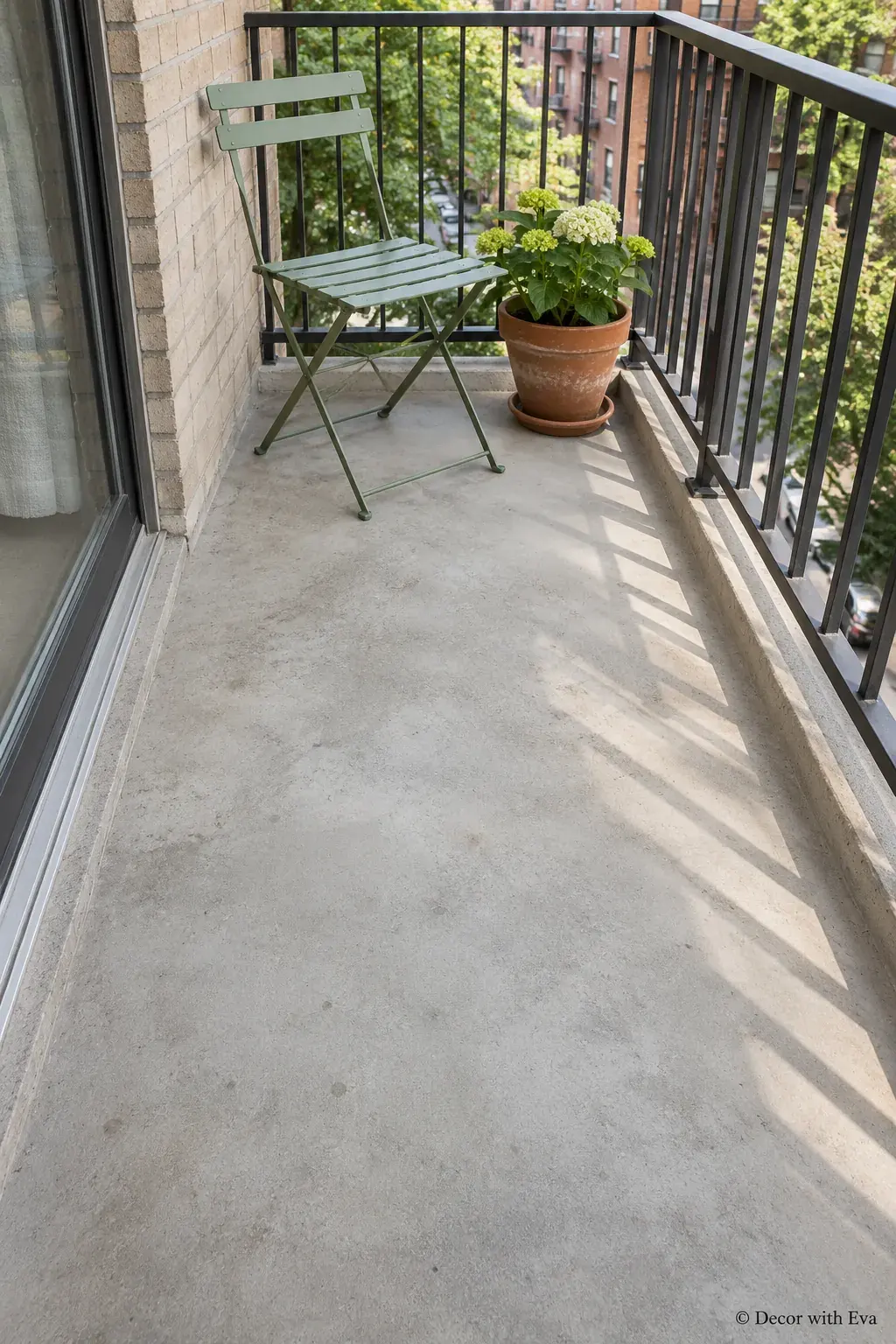
Sometimes the simplest floor idea is to keep the floor you have. Clean, sound concrete has a quiet texture that works with almost anything. Pair it with one colorful folding chair and a plain terracotta pot, then leave enough open space to appreciate the surface.
Use cleaning methods approved for the existing finish and check where rinse water may go. Stains, cracks and worn coatings need to be assessed rather than hidden under furniture. You do not have to turn the floor into a perfect showroom surface: ordinary color variation can suit a relaxed balcony.
Make it your own: Rearrange what you own before buying a covering. This is the no-new-floor option.
12. Choose a Warm Gray Painted Finish
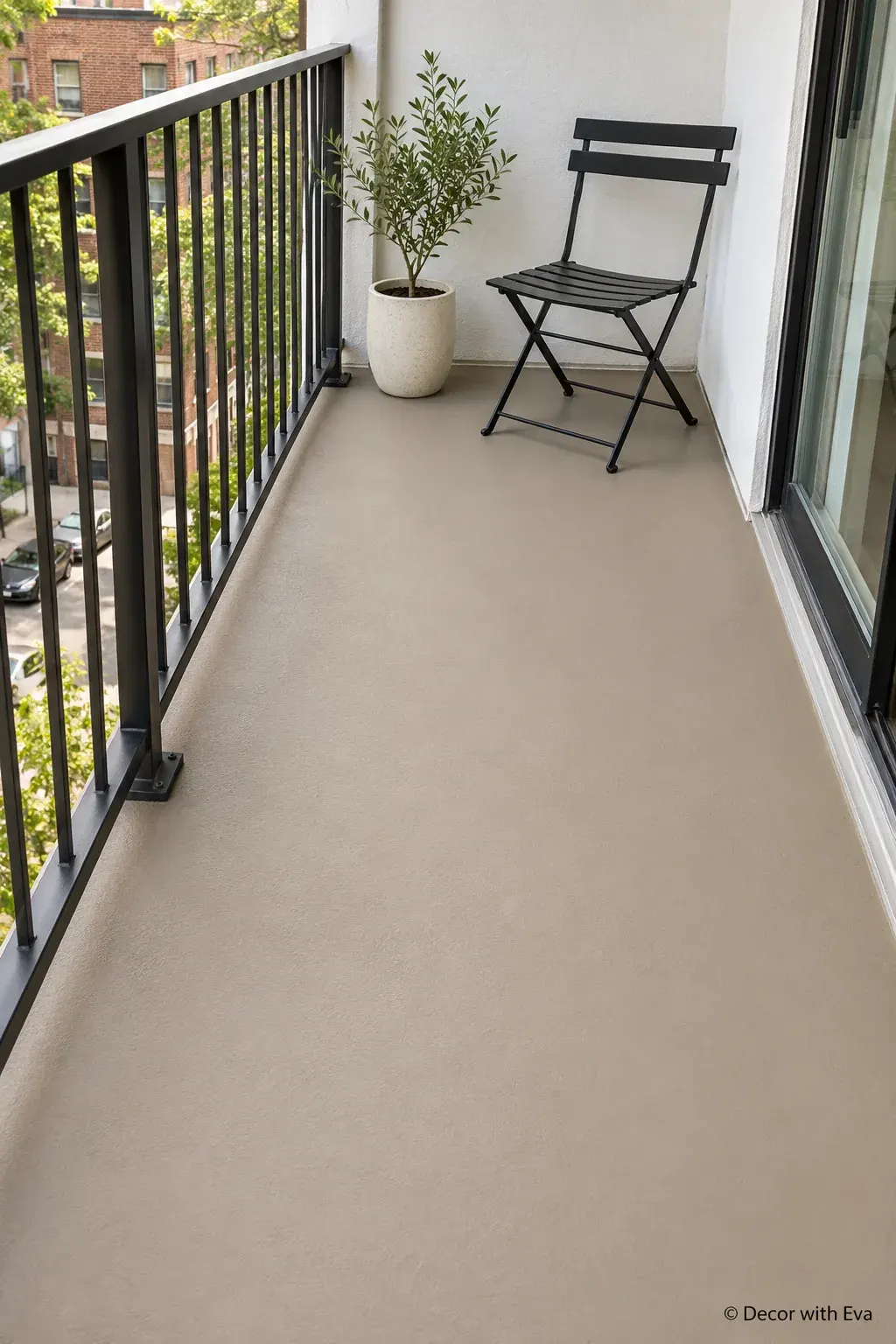
For an owner-approved refresh, a warm gray painted floor can make the balcony feel calmer without adding a thick covering. The color sits softly between white walls and darker railings, and it gives furniture a clean backdrop. Choose a matte-looking finish suited to the actual outdoor surface rather than a glossy indoor-floor look.
Painting is a permanent project, not a universally rental-friendly update. Identify the existing coating and waterproofing system before choosing a compatible exterior floor product. Have damaged or damp areas assessed, follow preparation and cure instructions, and confirm the finish’s suitability for wet conditions. Color alone does not make a floor slip-resistant.
Make it your own: Look at a dried sample in daylight and shade; warm gray can read beige or cooler depending on its surroundings.
13. Stencil a Geometric Pattern onto an Approved Floor
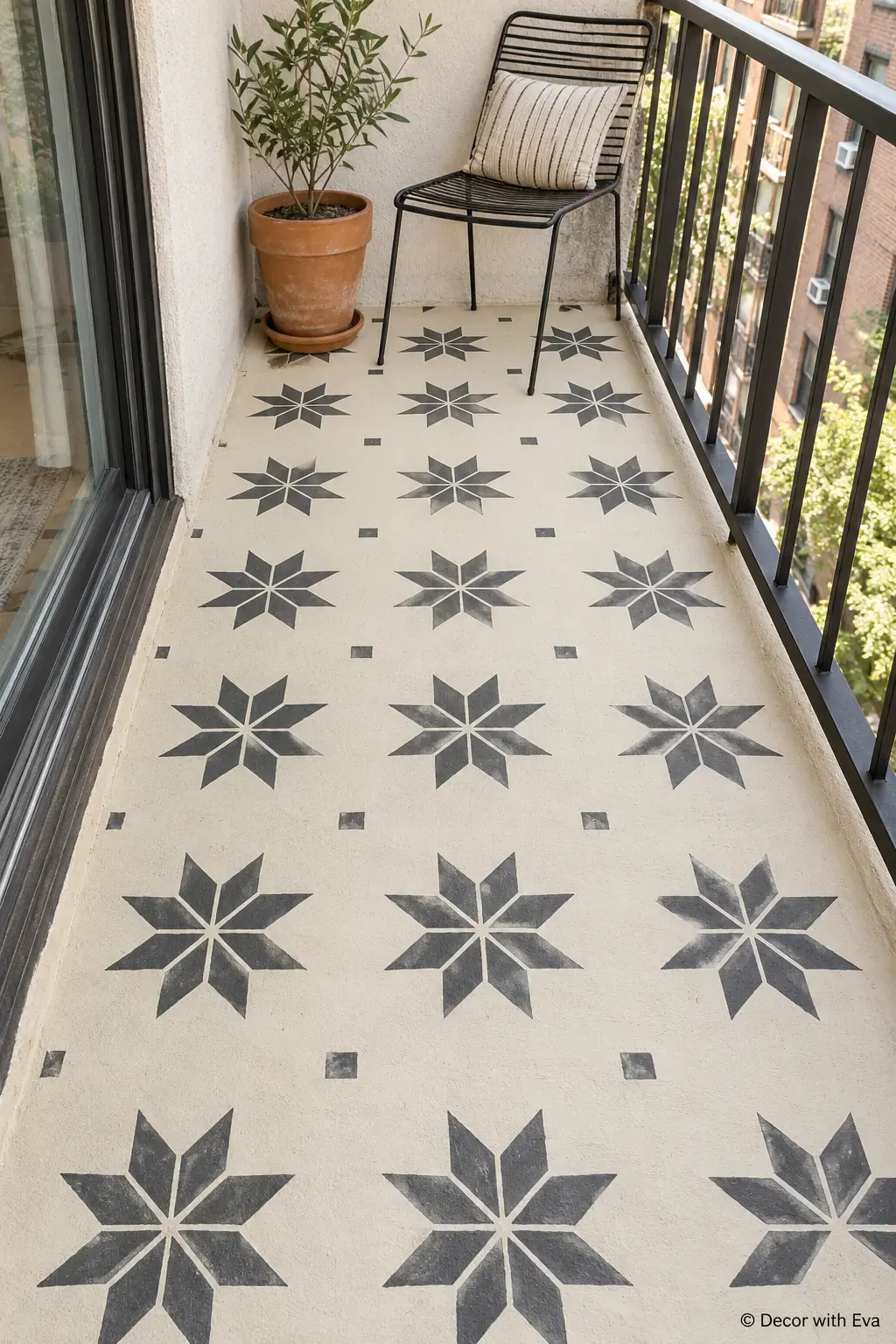
A stenciled pattern can give a plain balcony floor the character of decorative tile. Choose a repeated geometric motif with enough empty space around it to stay legible in a small area. Cream and muted charcoal keep the effect softer than a stark black-and-white checkerboard.
This is a painted finish, not peel-and-stick vinyl. It belongs on a sound surface that the owner and floor-system manufacturer permit you to coat. Test the entire compatible paint system, plan the pattern around the visible edges and have any waterproofing concerns resolved first. Expect small handmade variations rather than promising the precision or durability of installed porcelain.
Make it your own: Make a paper pattern at full size first to judge how many repeats will fit. Don’t use the balcony itself as the first test.
14. Bring in the Look of Wood with Exterior Porcelain
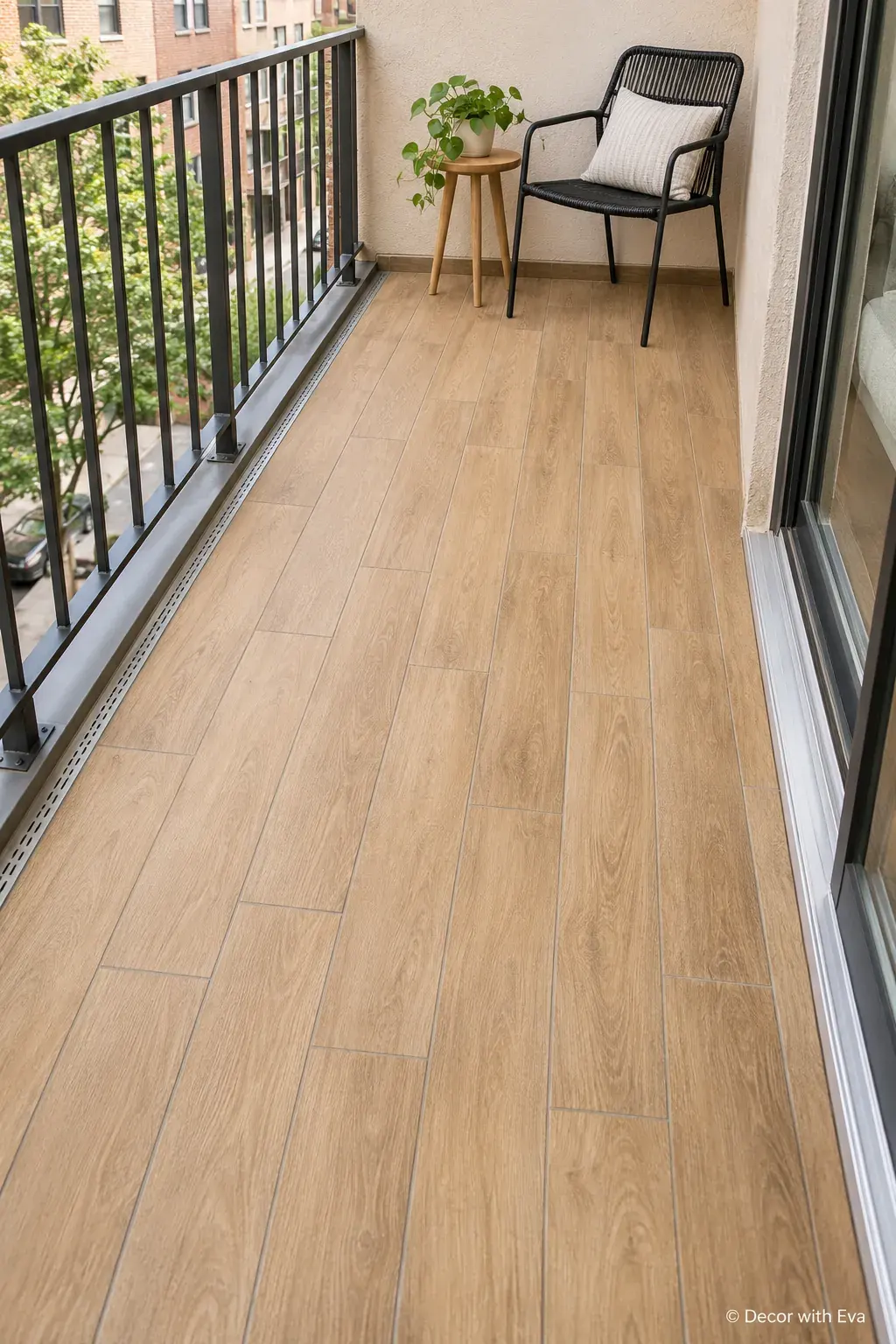
Wood-look porcelain can suit a balcony where you want long, quiet lines rather than a grid of small decking squares. A natural brown plank look pairs easily with black railings and simple planting. Keep the furniture understated so the longer floor pattern remains the main feature.
Run the planks along the long dimension for a continuous view from the doorway, or test a crosswise layout if that better suits the proportions. Compare a sample outdoors; color and printed grain can look different in sunlight. A qualified installer should specify the exterior-rated tile and its full assembly around the existing waterproofing, drainage and threshold.
Make it your own: If a permanent project is out of scope, use the removable wood-tile idea earlier in the article.
15. Try a Fine Terrazzo-Look Floor
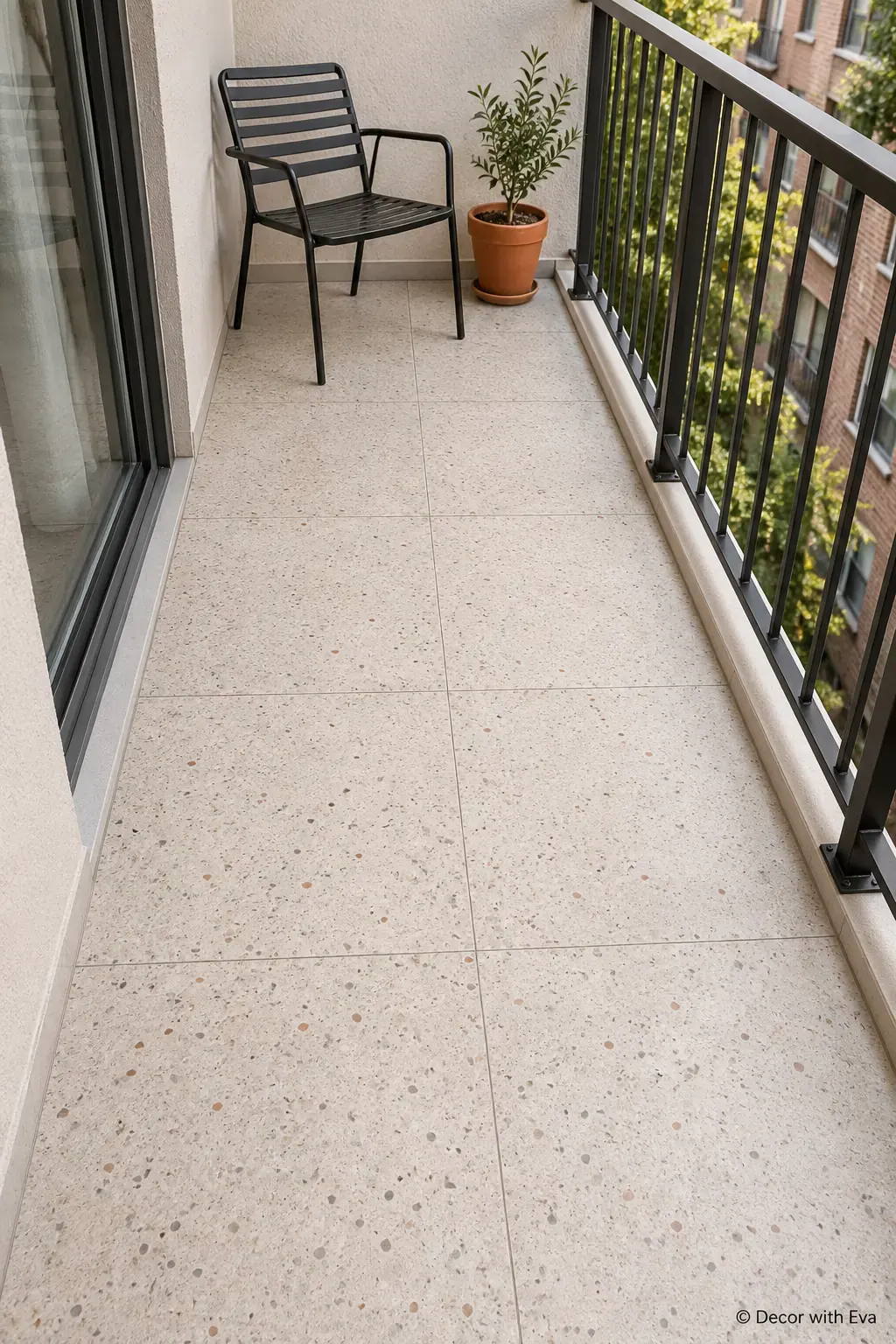
A terrazzo-look finish gives the floor detail without one large repeated motif. Fine cream, gray and warm beige flecks can connect pale walls, black furniture and terracotta pots. On a small balcony, a restrained chip size keeps the surface from feeling crowded.
Ask for a full tile sample so you can judge the chip mix and the background together. A larger tile shows more of the terrazzo pattern between joints; a smaller format may suit an awkward footprint. Have an exterior-rated assembly specified for the existing balcony, including wet-use suitability, finished height and added weight. The picture shows porcelain, not a newly poured layer.
Make it your own: Bring a sample beside the wall color and railing before choosing the final chip mix.
16. Give the Floor a Terracotta Tile Look
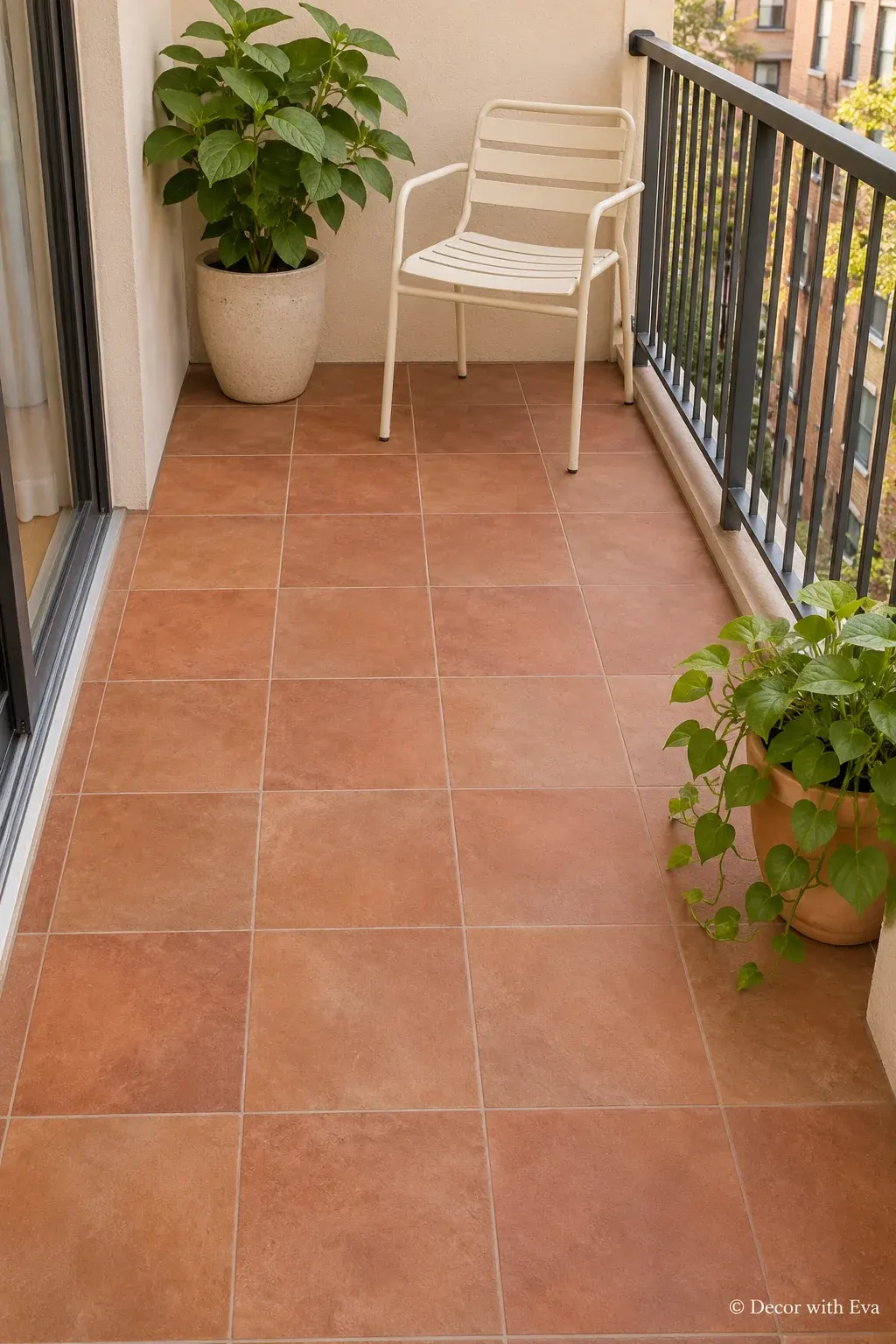
Warm terracotta tones can make a small balcony feel sunny even when the furniture is simple. A few green plants and a cream or pale wood chair are enough beside the earthy floor. Let slight color variation provide the interest rather than adding another patterned rug.
A simple square grid lets the warm color take the lead. Compare grout samples too: a close earthy shade gives a quieter look, while pale joints make the squares more visible. Real terracotta and terracotta-look porcelain have different care needs; this illustration uses a porcelain look. Ask an installer to specify an exterior-rated assembly that suits the balcony.
Make it your own: Try a few loose samples on the existing floor to compare the warm shades, then remove them before using the balcony.
17. Use Small Checks for a Classic Tile Floor
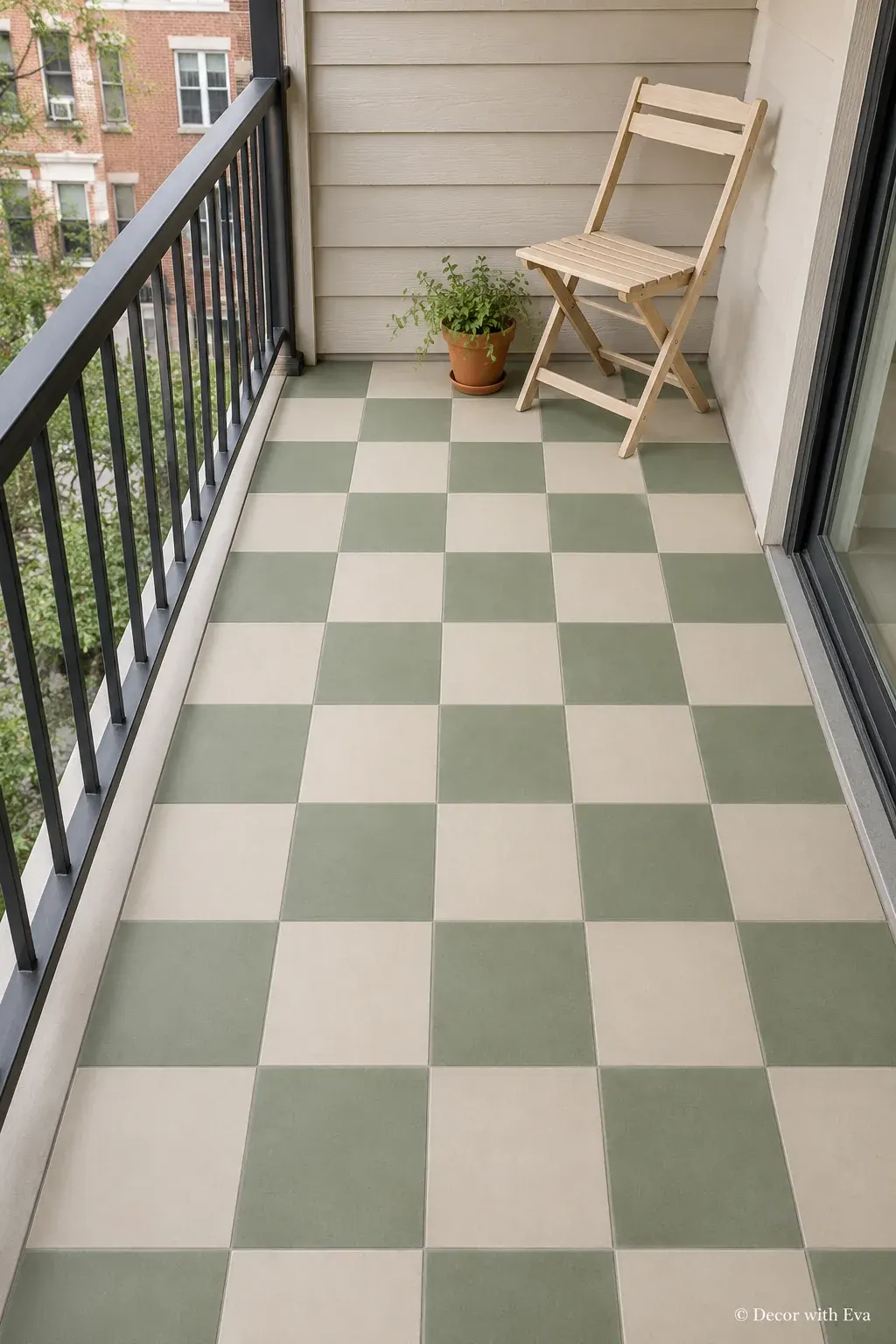
A cream-and-muted-green checkerboard gives a balcony an old café feeling. Small squares keep several repeats visible even in a narrow space, while the softer colors feel easier to live with than a very sharp contrast. Pair the floor with one plain chair so the pattern has room to breathe.
This is the fixed-floor counterpart to the removable diamond-check rug. Choose an exterior-rated product and have a qualified installer work out the balcony-compatible assembly. Plan the grid around the doorway and visible edges before installation; a neat full square in one place may leave an awkward sliver at the other end. The floor must still drain as intended.
Make it your own: For renters, borrow the checked look through a removable outdoor rug instead of altering the existing floor.
Keep the New Look Easy to Care For
Plan to lift removable coverings so you can clean and dry underneath. Wood needs its own finish care; a synthetic rug still needs drying and storage. For example, IKEA’s acacia decking care guidance calls for a hard, even surface and periodic reglazing. Follow the instructions for the actual product you choose rather than transferring one brand’s care routine to another.
Rug edges should lie flat, chair legs should stand steadily and the door should open freely. Bring lightweight pieces inside when wind or wet weather makes them impractical. If the base is damaged or water collects where it should not, resolve that problem before adding another decorative layer.
Let the Floor Do Some of the Decorating
Start with the look you want to see when you open the door: a warm grid of wood, a soft patch of color or a clean, quiet surface. Keep the furniture modest, leave part of the floor visible and give yourself enough room to use the balcony. A small space can feel finished without filling every inch.
For furniture and planting that fit around your new floor, explore our small apartment balcony ideas. When the holiday season arrives, these small balcony Christmas decor ideas add seasonal details without losing the useful floor space.